

How Can Restaurant Chains Plan Cold-Chain Delivery with a Brewery for Custom Kegged Fresh Beer?
Kegged fresh beer arriving at a restaurant still cold does not mean the cold chain was maintained properly; a brewery shipping on time does not mean there will be no shortages during the evening rush. For a restaurant chain ordering custom fresh beer, outlet sales, beer specifications, delivery routes, and receiving conditions should all be included in the same plan. When starting a project, it is usually more useful to first agree with the brewery on how the beer will be stored after delivery and how quickly it will be sold than to focus first on reducing freight costs per keg.
Work Backward from Outlet Consumption to Choose Keg Sizes and Replenishment Frequency
Stock planning should not be based solely on monthly sales at each outlet. Consumption varies between lunch and dinner, weekdays and weekends, and promotional periods, so it should be broken down by outlet, beer type, and date, distinguishing at least between typical daily sales and peak demand. For a new outlet without historical data, start with a small trial order and adjust based on actual pours to avoid overstocking the first order.
A replenishment quantity can be estimated using the formula: “projected daily consumption × replenishment interval + safety stock − available inventory − quantity in transit,” with all quantities converted to liters or kegs. Safety stock should cover delivery fluctuations, but should not exceed the outlet’s refrigerated storage capacity or the volume that can be consumed within the remaining shelf life. Inventory records should also distinguish between unopened kegs, tapped kegs, and kegs awaiting assessment due to an issue.
Keg size affects turnover after tapping. Choosing large kegs for low-volume outlets may reduce the packaging cost per unit, but increases the risk of leftover beer. Before signing a contract, confirm the stated capacity, coupler specifications, compatibility with the dispensing equipment, the shelf life of unopened kegs, the recommended time for consumption after tapping, and the applicable storage conditions. The shelf life of an unopened keg should not be applied directly to beer after it has been connected to the dispensing system.
Temperature Control Must Cover Every Handover, Not Just Be Listed on the Waybill
The term “fresh beer” alone is not enough to determine the required transport temperature. Filtration, pasteurization, beer stability, and packaging format all affect storage and transport requirements. The brewery should provide written temperature requirements for the specific product. A single temperature should not be applied to all beers, and the serving temperature at the dispensing machine should not be used as a substitute for storage and transport requirements.
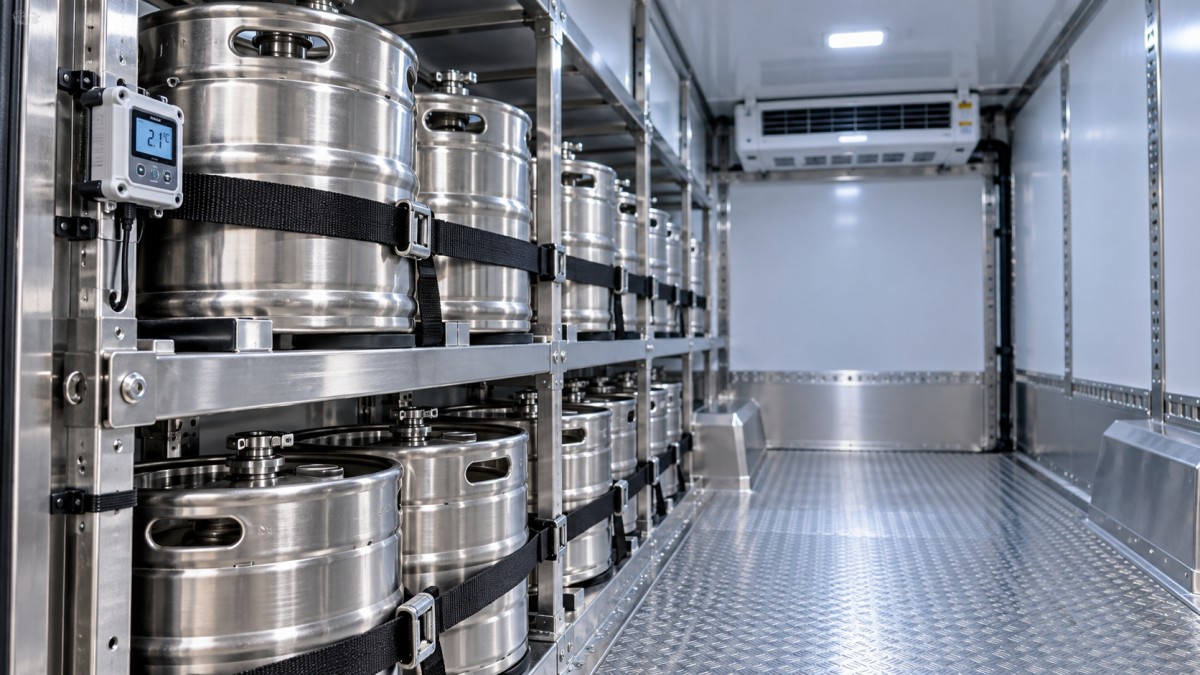
Cold-chain handovers should cover dispatch from the brewery, loading, transit, unloading, and storage. Vehicles should be pre-cooled as required, and products should not be left waiting for extended periods on an ambient-temperature loading dock. Outlets need to reserve refrigerated space and ensure staff are available to receive deliveries. For multi-stop deliveries, pay particular attention to the final outlets: frequent door openings and unloading delays can cause temperature differences between different positions in the same vehicle.
The parties should also agree on how temperatures will be recorded, equipment calibration requirements, measurement-point locations, and criteria for determining exceptions. Air temperature in the vehicle, keg-surface temperature, and beer temperature are not the same. A single temperature reading is useful for screening, while continuous records are more useful for traceability. Without records from the journey, it is difficult to determine whether a temperature excursion occurred in transit based only on a reading taken at the time of delivery.
Factor Handover Risks into the Choice Between Direct Delivery and Regional Transshipment
When outlets are clustered and demand per delivery is stable, direct delivery from the brewery may be worth considering. When outlets are dispersed and orders are small and fragmented, consolidating shipments at a regional cold store before delivery may offer more flexibility, but adds handling, inventory, and handover steps. Compare options by calculating warehousing, last-mile delivery, temperature recording, return-keg transport, and exception-handling costs together, rather than comparing trunk-haul rates alone.
Global Craft Beer Contract Manufacturing Network (ODM.BEER), a subsidiary of Shandong Yangchun Beer, provides support for recipe development, packaging design, label compliance reviews, and filling production, and can assess fulfillment arrangements based on production facilities across Shandong, Qinghai, and Hainan. For each project, it is still necessary to confirm which facility will produce the proposed beer, whether the keg line is suitable, and whether the delivery route covers the outlets. A shorter geographical distance does not necessarily mean faster delivery to the outlet.
Make Receiving Procedures Practical and Assign Responsibility for Exceptions
When receiving a delivery, outlet staff should check the beer type, quantity, batch, production date, remaining shelf life, keg condition, and seal, as well as the agreed temperature records. The receiving checklist should be easy for shift staff to understand, rather than kept only in a head-office folder. For reusable kegs, maintain records of keg IDs, deposits, return dates, and responsibility for damage.
If temperatures exceed the agreed limit, a leak is found, or the batch does not match, first identify and isolate the product, then retain photographs and records. The designated person should decide, in accordance with the agreement, whether to accept or return the product. It should not simply be chilled again and put up for sale. The terms on responsibility should specify the handover points for the carrier, brewery, and outlet, as well as response deadlines, replenishment arrangements, and the basis for handling losses.
Excessive foaming or changes in flavor are not necessarily caused by transport. Dispensing pressure, line temperature, coupler seals, and cleaning procedures should also be included in the investigation. At commissioning, it is more reliable to inspect the refrigeration, gas supply, dispensing equipment, and cleaning procedures together than to look for causes one by one after a customer complaint.
Validate the Actual Delivery Route Before Expanding to More Outlets
Yangchun Beer supports flexible small-batch customization and beer sampling, which can be used for initial taste selection. However, a successful tasting does not mean the delivery plan has been validated. A trial run should cover representative outlets with different sales volumes and receiving conditions. Record delivery times, temperature-control records, actual pour volumes, leftover-beer losses, and stockouts before setting the regular ordering schedule.
Before confirming production scheduling with the brewery, it is advisable to prepare a delivery appendix approved by both parties, specifying outlet requirements, keg and coupler specifications, storage and transport conditions, order cut-off times, receiving criteria, and emergency contacts. Use it to revise replenishment plans for holidays, promotions, or route changes, rather than relying on last-minute phone calls to expedite deliveries.