

How should you evaluate channel protection and return policies when choosing a beer manufacturer for regional distribution?
When choosing a beer manufacturer for regional distribution, don't focus only on the purchase price. Whether channel protection can prevent cross-region sales and whether responsibility for returns is clearly defined directly affect your profits and inventory risk. Getting the beer into your warehouse is not difficult; the challenge is when the same product suddenly appears nearby at a lower price after you have established retail outlets, or when unsold stock remains after peak season with no option to return it and too little time to sell it gradually.
When evaluating policies, don't just ask, “Is there regional protection?” or “Can I return the goods?” Ask instead: Under what conditions does the policy take effect? What evidence is required? Who handles the case, and how long does resolution take? These details are more worth examining than the promises in recruitment materials.
For regional exclusivity, first clarify the scope of protection
Being the “exclusive distributor for a city” does not mean all business in that city belongs to you. The manufacturer may reserve e-commerce, national chain accounts, group purchases, or existing major customers. If you are responsible for supplying restaurants but the manufacturer can sell the same product directly to local chain pubs, the supposed exclusivity may leave room for conflict.
The contract appendix should specify the administrative region, authorized channels, product names and specifications, as well as a list of customers reserved by the manufacturer. Discuss in advance whether new products are covered by the protection and whether another distributor can be appointed for the same beer in different packaging. If the contract names only the brand without specifying the products, the parties may easily interpret it differently later.
Also check how authorization is tied to sales targets: Are you assessed on purchase volume or actual sales? If targets are not met, will you be given time to improve, have your territory reduced, or lose your authorization immediately? Taking on a large initial order in exchange for exclusivity before a new market is established often means assuming the recruitment risk through inventory. A more prudent approach is to grant authorization in stages and align replenishment with sell-through.
To prevent cross-region sales, check whether the source of the goods can be traced and the issue addressed
When you find low-priced goods from outside your region, a screenshot usually proves only that an offer exists, not where the goods came from. Ask the manufacturer to demonstrate its traceability system: Can carton codes, batch numbers, and dispatch records be linked to a distributor? Can goods still be traced after they are unpacked and sold individually? What proof of purchase must be submitted with a complaint?
A handling procedure is more useful than simply stating that cross-region sales are “strictly prohibited.” The agreement should set out who receives complaints, when a response is due, how cases are verified, and how supply practices will be corrected if a violation is confirmed. If compensation for losses is involved, the evidence requirements and calculation method should also be specified; a vague statement that “the manufacturer will coordinate” is not enough.
Low online prices also need to be assessed by source: platform subsidies, clearance sales of products nearing their expiry date, and cross-region supply are not the same thing. Regional management should not be equated with imposing a mandatory uniform minimum resale price. Arrangements involving resale price restrictions should be reviewed for compliance. Distributors should focus instead on the boundaries of supply, sharing of promotional information, and traceability of problematic sources.
Returns and exchanges involve several distinct areas of responsibility
Quality issues, transport damage, slow-moving products nearing expiry, and termination of cooperation should not be treated as one issue. For suspected quality problems, isolate the relevant batch first and retain samples and storage and transport records. Testing should be carried out as agreed when necessary, and the products should not continue to be sold while responsibility remains unresolved. Quality-related responsibility should not simply be subject to the same return or exchange ratio as ordinary slow-moving goods.
For transport damage, clarify who is responsible for carriage, how delivery inspection is handled, and the deadline for reporting discrepancies. Count and photograph the goods upon receipt, and note any issues on the proof of delivery. Agree separately on a reporting procedure for concealed damage. Blanket clauses such as “no objections of any kind after signing for delivery” require careful review.
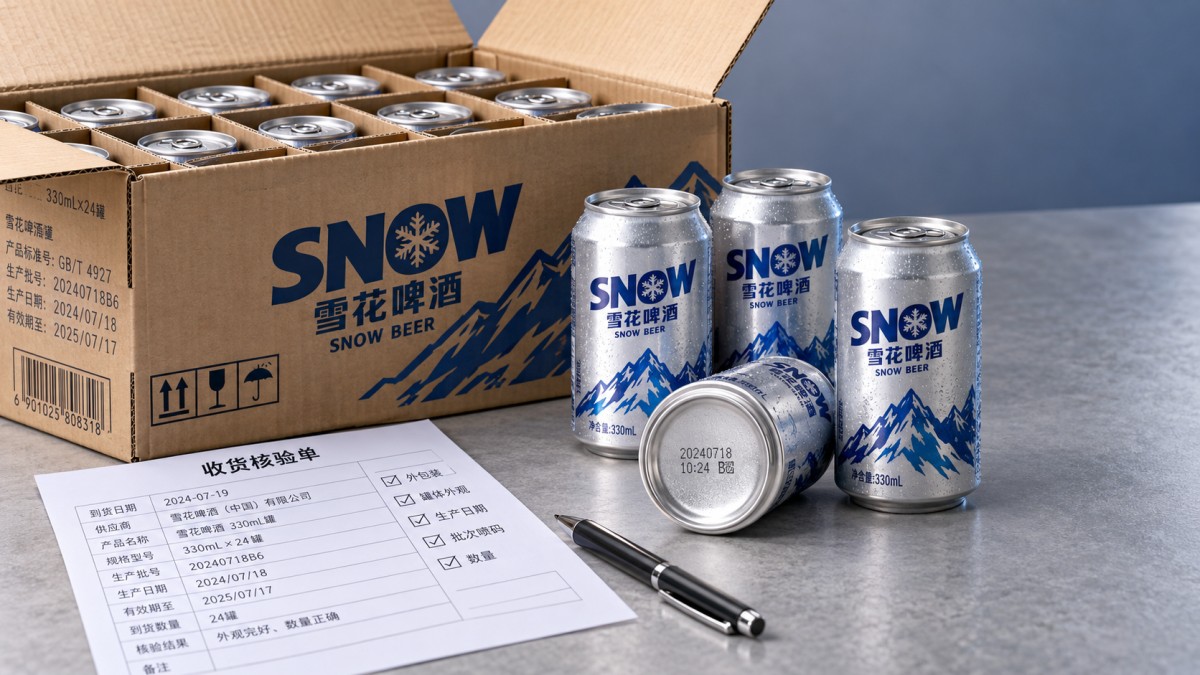
For exchanges of slow-moving goods, ask more detailed questions: Over what period is the exchange allowance calculated as a percentage of purchases? How much shelf life must remain when the request is submitted? What condition must the outer packaging and labels be in? Can you exchange the goods for the same product or choose a faster-selling product? Who pays for return and reshipping costs? If an exchange is allowed only after placing a large additional order, it may simply tie up more funds.
Pay particular attention to “exchange only, no refund.” After goods are returned, will you receive a cash refund, a credit against accounts payable, or a credit toward your next purchase? These have very different financial effects. The settlement of remaining inventory, deposits, and unpaid rebates upon termination of cooperation should also be set out separately, rather than discussed only after supply has stopped.
Consider shelf life and replenishment cycles together
Even when exchanges are allowed, the outcome differs greatly depending on whether the goods received come from a fresh batch or have already been in storage for some time. Consider specifying the minimum remaining shelf life upon delivery or the maximum time elapsed since production, while allowing sufficient time for delivery to retail outlets, display and sales, and submission of return or exchange requests. The specific threshold should be determined based on the product's stated shelf life, storage requirements, and local turnover.
Kegged fresh beer and canned beer stored at room temperature also cannot be managed using the same warehousing and distribution assumptions. For products requiring a cold chain, confirm responsibility for temperature control, transport, and retail storage. For returnable kegs, separately account for deposits, collection, and damage. Rather than negotiating for a higher return allowance, first compare the freight costs and working capital tied up by small-batch replenishment.
For private-label products, the focus of protection changes
If you choose to commission a beer manufacturer to produce your own brand rather than distribute an existing brand, key considerations also include the trademark, the permitted use of packaging designs and exclusive recipes, and how leftover packaging materials, finished goods, and production losses will be handled. Custom products have limited resale opportunities, so you should not assume they qualify for the same returns for slow-moving stock as ordinary goods in circulation.
For example, Global Craft Beer Contract Manufacturing (ODM.BEER), affiliated with Shandong Yangchun Beer, offers beer formulation development, packaging design, label compliance review, and filling services, and supports small-batch flexible customization for some products. However, minimum order requirements for specific beer styles and packaging, as well as regional protection and return policies, should still be confirmed item by item. Commercial commitments should not be inferred from production capabilities.
Before signing, review the authorization appendix, cross-region sales handling procedures, and return and exchange settlement terms together. Then use a small-batch order to verify delivery, sell-through, and after-sales response. Manufacturers that can clearly define the boundaries and are willing to put them in the contract are generally more worth pursuing than those that merely emphasize that their “policies are negotiable.”