

Label compliance is an aspect of beer contract manufacturing that is easily overlooked, yet it can directly lead to product delisting, recalls, or even administrative penalties. For business evaluators, determining whether a contract manufacturer has sound compliance capabilities involves far more than reviewing its production qualifications; more importantly, it depends on whether it can provide systematic support in details such as label review and standards implementation.
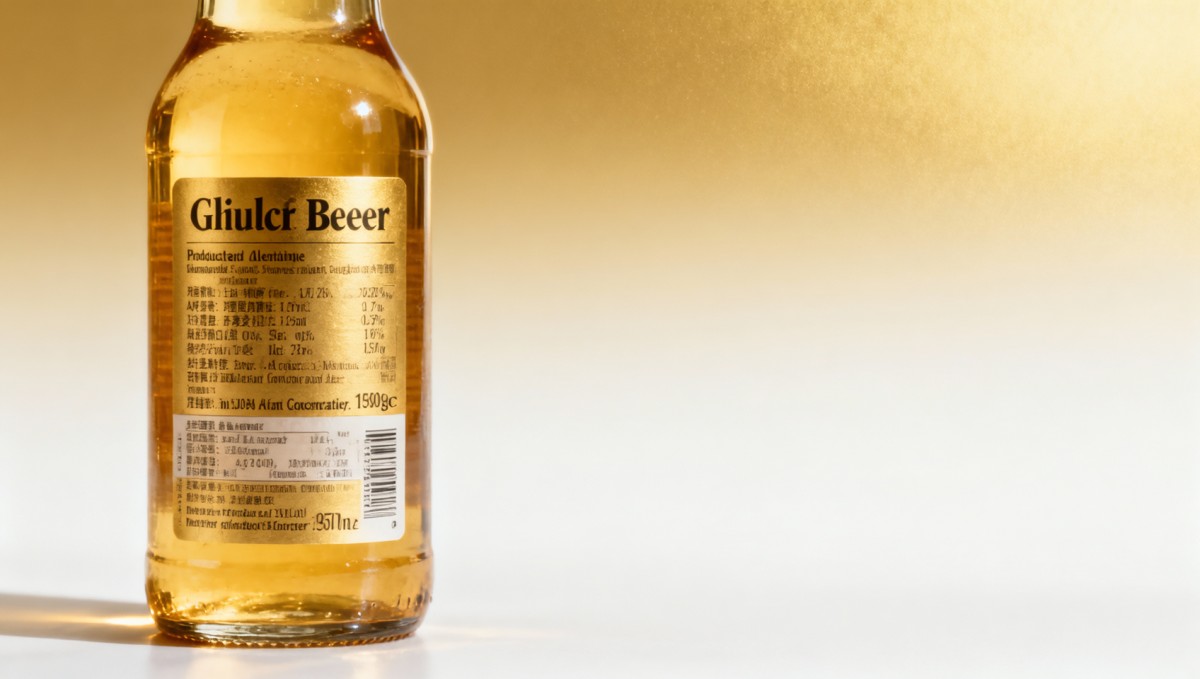
In beer contract manufacturing, the key challenges in label and food standards compliance are mainly reflected in the following areas:
Label Compliance: Far More Than Just Looking Good
Many customers new to contract manufacturing tend to view label design as simply a matter of whether the packaging looks attractive. In fact, beer labels are legally required documents strictly governed by the Food Safety Law and the General Standard for the Labeling of Prepackaged Foods (GB 7718). Every word on the label—including the product name, ingredient list, original wort concentration, alcohol content, production date, shelf life, storage conditions, producer information, place of origin, and food production license number—must be accurate and fully consistent with the contract manufacturer's actual production conditions.
Common compliance pitfalls include:
- Non-compliant product names: For example, labeling a product as “all-malt beer” when the actual malt formulation does not consist entirely of malt; or labeling it as “unfiltered beer” when the product has been filtered or sterilized, failing to meet consumers’ general understanding of “unfiltered.” Such names can easily trigger professional consumer claims or market regulatory penalties.
- Incorrect ingredient list labeling: Adjuncts used in beer (such as rice, corn starch, and fructose syrup) or additives (such as caramel color and carbon dioxide) must be truthfully listed in descending order of added quantity. Omissions or incorrect ordering directly violate regulatory requirements.
- Confusion between alcohol content and wort concentration: Some customers mistakenly equate “original wort concentration” with “alcohol content,” resulting in incorrect label data. This is especially common in e-commerce platform spot checks.
- Inconsistency between place of origin and producer information: Under the contract manufacturing model, the brand owner commissions the manufacturer to produce the product. The label must clearly state the information of both the “commissioning party” and the “contracted party,” and the place of origin should be the location of the contracted party (the contract manufacturer). Ambiguous or reversed information will be deemed non-compliant labeling.
Therefore, for a contract manufacturer with mature compliance capabilities, label review should be integrated into the design stage rather than conducted merely as a formality before printing.
Food Standards: The “Invisible Thresholds” of Different Export Destinations
Beer contract manufacturing must not only meet domestic standards; when foreign trade exports are involved, it must also comply with the regulatory requirements of the target country or region. This is not simply a matter of copying domestic standards, but requires differentiated adjustments for different markets.
Taking flavor additives commonly used in craft beer as an example, certain food additives permitted domestically may be restricted or prohibited in the EU or Japan. Likewise, claims such as “zero sugar” and “fructooligosaccharides” may have different definitions and testing methods in different countries. If a contract manufacturer lacks the ability to continuously track international regulations, its products are highly likely to be detained or returned due to compliance issues during export.
In addition, beer industry standards themselves are continuously evolving. For example, regarding the definition of “craft beer,” although there is currently no mandatory national standard, industry association standards (such as T/CBJ 3101 Beer and T/CBJ 3102 Brewpub Beer) are gradually being improved, setting more specific requirements for raw materials, processes, flavors, and other aspects. Contract manufacturers that lead or participate in drafting these association standards generally have a deeper understanding of the standards and implement them more rigorously.
How Can You Assess a Contract Manufacturer’s Compliance Capabilities?
When evaluating a contract manufacturer, business evaluators should not merely ask whether it “has the required qualifications.” The following methods can more effectively assess its compliance level:
- Review its historical label review cases: Ask the contract manufacturer to provide review records for several finished-product labels from different customers and product categories, to understand whether its review process is standardized and whether it has identified and corrected actual errors.
- Ask about its standards update mechanism: Find out how the contract manufacturer tracks regulatory changes in China and target export countries. Does it rely on an internal legal team or third-party service providers? Does it conduct regular internal training or update its procedures?
- Focus on its product testing reports: In addition to routine factory inspection reports, does it have type inspection reports issued by authoritative third-party institutions? Do the reports cover all key indicators claimed on the label, such as alcohol content, original wort concentration, and specific additive content?
- Assess its support capabilities for small-batch trial production: Compliance issues are often most fully exposed during the trial-production stage. A contract manufacturer willing to support small-batch trial production and proactively provide label compliance recommendations during the process generally has stronger risk-control capabilities.
Yangchun Beer’s Specific Compliance Practices
In its contract manufacturing business, Yangchun Beer integrates label and standards compliance as an upfront service. Its technical team becomes involved in compliance review as soon as customers confirm their beer formulation and packaging design intentions. For example, for common “zero sugar” claims, Yangchun Beer verifies whether the product’s actual test data meets the requirements of the Zero-Sugar, Zero-Fat Beer association standard that it led in drafting, and then guides customers on making compliant claims within the framework of that standard, avoiding disputes caused by absolute terms such as “sugar-free” and “zero sugar.”
At the same time, its export food registration qualification means that its production processes, warehousing and logistics, traceability system, and other areas have passed review by customs inspection and quarantine authorities, providing the basic conditions for supplying international markets. For export-oriented customers, Yangchun Beer’s quality control team can assist in providing documents required by the target market, such as ingredient declarations and certificates of origin, but customers need to clearly specify the export destination at an early stage.
The Key Lies in Being “Upfront” and “Systematic”
Label and standards compliance in beer contract manufacturing is not something that can be remedied afterward. It requires contract manufacturers to have compliance awareness throughout the entire chain, from R&D and production to packaging, and to translate this awareness into executable review procedures. For business evaluators, the primary criterion for determining whether a contract manufacturer is trustworthy is not its claims of being “long-established” or “large-scale,” but whether it can provide a clear, verifiable solution to compliance issues and is willing to communicate proactively with customers before risks emerge.
When evaluating contract manufacturing partnerships, treating compliance capabilities as an independent and important evaluation dimension, rather than focusing solely on price or production capacity, can better prevent subsequent market risks.