

When building your own beer brand, if you are still testing sales channels, sales potential, and consumer preferences, consider using a brewery’s proven recipe first. If you have already defined the target flavor and existing beer styles cannot meet your needs, then invest in custom development. The difference between these two approaches comes down to how much development cost, waiting time, and uncertainty in large-scale production you are willing to accept for a distinctive flavor.
There is also a practical option between the two: make limited adjustments to a proven beer base. When evaluating your options, compare “use as is,” “make targeted adjustments,” and “develop from scratch” together, rather than pushing the project toward complex R&D from the outset.
First, clarify: Does the differentiation you want require a recipe change?
For corporate gifts, event beverages, or food-service channels with an established customer base, packaging recognition, broad drinker appeal, and delivery time may matter more. If the brewery already has a suitable wheat beer or another beer style, a proven recipe can also be used to launch your brand. Having your own brand does not mean you must have an entirely new recipe.
However, if your brand promises a clearly defined flavor experience—for example, more pronounced malt aroma, less perceived bitterness, or a particular balance between fruit aroma and body—you need to determine whether an existing product can deliver it. This is especially important when flavor differentiation is the main reason consumers buy the product; changing only the packaging is unlikely to support long-term positioning.
As far as possible, describe your requirements in terms that can be tasted and compared. “Refreshing but not watery” and “pronounced fruit aroma, but not so sweet that it overpowers the malt aroma” are more useful in R&D discussions than “make a premium craft beer.” Then list which requirements are essential and where you can compromise to determine whether a new development project is truly necessary.
How do the three approaches differ in cost and delivery?
A proven recipe can usually reduce recipe testing, but time to market still depends on packaging procurement, label review, and production scheduling. Special bottle shapes or custom packaging may require considerable lead time, even when the beer itself has already been selected.
Custom development requires time for repeated sampling, ingredient selection, and scale-up production. Being satisfied with the taste of a small sample means only that one stage is complete; you still need to verify that the same flavor can be consistently achieved with actual equipment, filling methods, and storage conditions.
When comparing quotations, include R&D and sampling, beer, packaging materials, filling, testing, warehousing, and transportation in the same cost comparison, and clearly state what is excluded. Also distinguish the minimum quantities for starting R&D, beer production, and packaging materials. These quantities may differ. “Small-batch production available” does not mean every beer style and packaging material can be ordered in the same quantities.
After receiving samples, don’t decide based on the first sip
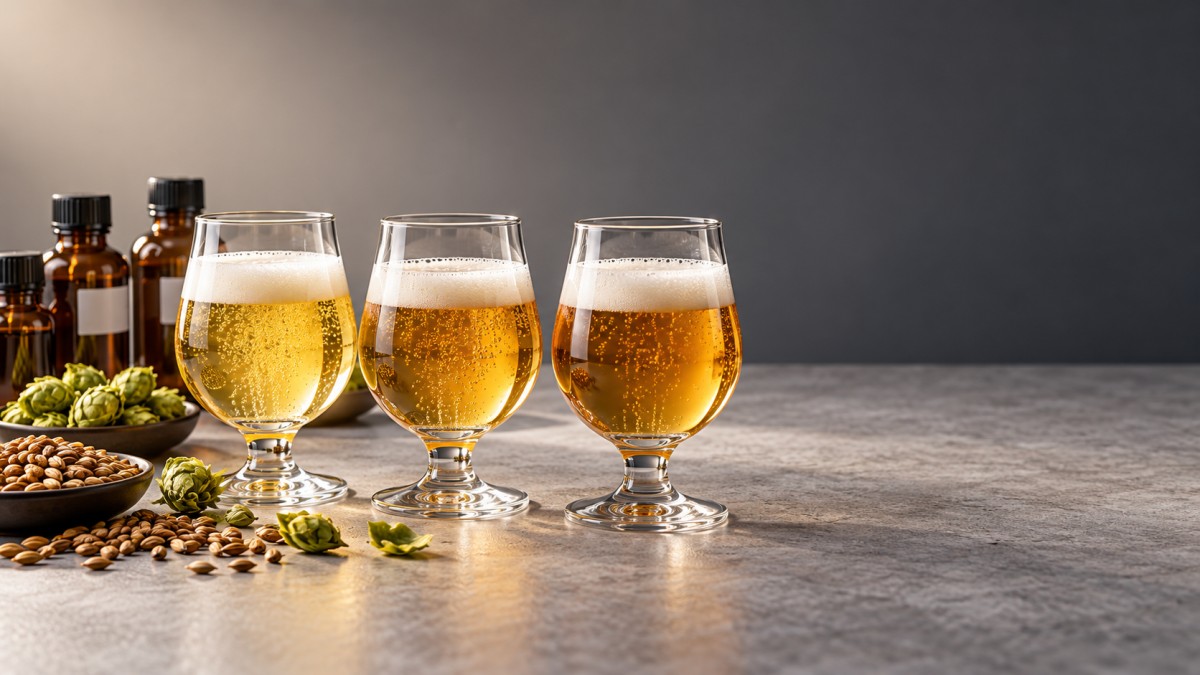
When selecting samples, compare them at similar temperatures and in the same glassware, then evaluate them in the actual sales setting. Draught beer served in a bar, canned beer for retail, and beer for gift sets have different requirements for consumption, time in circulation, and storage conditions. A beer that tastes right on site may not suit the intended sales channel.
If your target is general food-service consumers, look beyond the aroma of the first sip and consider lingering sweetness, the bitter aftertaste, and how well the beer pairs with food during extended drinking. Agreement within your internal team is no substitute for feedback from target consumers.
After approving a sample, retain an approved reference sample and document the alcohol content, original gravity, key sensory descriptions, packaging specifications, and acceptance criteria. Flavor should be described through sensory evaluation and cannot be summed up by a few physicochemical indicators alone; at the same time, “taste to match the sample” is not enough as the only written specification.
When choosing a brewery, look at how the recipe translates into large-scale production
The number of beer styles a factory can offer indicates only the range of options. More useful questions are whether it has produced a similar style before, whether the target packaging is compatible with its existing production lines, whether key ingredients can be supplied consistently, and how it handles deviations in flavor between batches.
When using fruit juice or specialty ingredients, also assess ingredient use, product classification, label claims, and stability. An ingredient name can point to a development direction, but it does not by itself establish product benefits. Considering these factors during development can reduce rework after the product has been finalized.
For example, Global Craft Beer Contract Manufacturing Network (ODM.BEER), backed by Shandong Yangchun Beer, offers proven beer styles, recipe development, packaging design, label compliance review, and filling support. Beer samples can also be requested for tasting. When evaluating this kind of one-stop service, start by selecting a proven sample close to your positioning, then discuss the extent of any adjustments so that the scope of development is based on the actual flavor gap.
The contract should also specify whether proven recipes may be supplied to other brands, who owns custom recipes and R&D results, whether exclusive use is agreed, and what materials can be provided if you later change manufacturers. Paying an R&D fee does not automatically give you an exclusive recipe or complete process documentation; these points should be clearly agreed in writing.
Base your project decision on practical, actionable conditions
For a first-time brand launch, you can start by using a suitable proven recipe to test channel sales, then decide whether to develop a dedicated beer style based on repeat-purchase feedback. If you already have stable sales channels and consumer dissatisfaction with the current product centers on a particular flavor, there is a stronger basis for targeted development.
Before contacting a brewery, prepare your sales scenario, target selling price and cost range, initial order quantity, packaging format, and desired delivery date, along with descriptions of acceptable and unacceptable flavors. Ask the brewery to provide samples, cost breakdowns, timelines, and acceptance arrangements for both proven-recipe and custom-development options. Clearly stating these conditions will help you make a purchasing decision more than simply comparing “ready-made versus custom.”