

Can You Choose Your Own Beer ODM Formula? It Depends
“Can I decide the formula myself?”—this is the question clients discussing contract manufacturing always ask within the first five minutes. It is not small talk; they genuinely need an answer. Some have just registered a trademark and want to turn the “grapefruit wheat beer with a lingering sea salt finish” in their mind into reality; others have test-sold in their taprooms for three months and found that customers keep saying, “Make it lighter and more refreshing,” so they are eager to adjust the parameters; still others are creating customized corporate gift boxes and want to add oyster peptides while worrying that the fishy note may overpower the malt aroma... Behind all these requests is a test of one boundary: to what extent can I really be “in charge”?
The answer is not simply “yes” or “no,” but rather “which parts can you control, and which parts must be handed over.” It is like hiring a master craftsman to restore an old house—you can decide whether to use blue bricks or gray tiles and what patterns to carve into the window lattice, but you need to listen to him on how to lay the foundation and support the beams and columns. Beer formula development works the same way. It is a production line with clearly defined roles, and a contract brewery is never just an execution button; its role is to translate your ideas into brewing language that can be stably mass-produced, compliant, and consistent in flavor.
What You Can Lead: From “What I Want to Drink” to “What It Should Be Like”
The decision-making authority that truly belongs to the brand owner is concentrated in the “defining the target” stage. For example:
Want to create a low-sugar fruit beer that is not bland? We have a library of more than 300 base beer processes, including German wheat beer, hazy IPA, sour beer bases, non-alcoholic wort, and more, allowing us to quickly match the framework. Want to add hyaluronic acid for a smoother mouthfeel, or use oyster peptides to reinforce an “ocean-inspired” concept? For functional additives such as these, you can express preferences regarding the type, approximate addition range (such as 0.1%–0.3%), and compatibility with yeast. Even key parameters that influence the flavor profile, such as malt ratio preferences (for example, using more Pilsner malt to reduce color) and hop addition timing (dry hopping or adding during the later boiling stage), can be repeatedly worked through with our brewers.
This is not laissez-faire; it is collaborative modeling. We will show you flavor wheels, saccharification curve diagrams, and tables showing the relationship between alcohol content and original wort concentration—not to make you calculate formulas, but to help you build an intuition for “what result will my choice lead to?” Many clients only truly realize, upon first seeing a comparison chart of how yeast strains affect ester formation, that choosing the wrong yeast means even the best fruit jam cannot rescue that solvent-like flavor.
What You Must Let Go: From a “General Idea” to “Every Liter Being the Same”
Once the project enters the engineering implementation stage, control becomes much tighter. For example:
You may propose “add 0.25% oyster peptides,” but should they be used as freeze-dried powder or hydrolysate? What should the dissolution temperature be? Is a pre-mixed buffer solution required? Such details, which directly affect stability and shelf life, are determined by the quality control team in accordance with SC production specifications. You may say “make it more refreshing,” but should the final adjustment be made to saccharification temperature, protein rest time, or yeast inoculation rate? This requires dynamic calibration based on the actual protein content and α-amylase activity of the malt in the current batch—without instrument data onsite, it is difficult to make a sound judgment based on experience alone. Also, putting “zero sugar” on the label means residual sugar per 100ml must be ≤0.5g. This threshold compels us to upgrade fermentation endpoint control, cold filtration precision, and filling cleanliness, rather than simply adding less malt.
In other words, you can make the call that “I want an off-road vehicle,” but the chassis ground clearance, differential lock logic, and transmission shift calibration must be completed by automotive engineers. Yangchun Beer has maintained uninterrupted production lines for 39 years and has seen many clients bring the roasting curves of hand-brewed coffee beans from coffee shops and ask for them to be replicated in ton-scale mash kettles—the flavor logic may be similar, but the engineering logic is entirely different.
A Commonly Overlooked “Invisible Authority”: The Sample Iteration Pace
Many people assume that finalizing a formula means immediate mass production. In fact, the most critical authority lies in whether you can control the “trial-and-error pace.” At ODM.BEER, small-batch sampling starts from 1 keg (20L), and physical samples are usually available within 7–12 working days from the initial beer version through three rounds of optimization. Compared with models where samples take a month to produce and every revision requires rescheduling production, this effectively gives brand owners much more room for error.
Please note, however: whenever an adjustment involves a malt ratio change exceeding ±5%, the addition of a new highly active additive, or a yeast strain replacement, a 72-hour stability test must be conducted again. This is not a procedural obstacle; it is to prevent slight haze from appearing in a batch after two weeks of storage during the rainy season in southern China—a problem that will not show up in laboratory cup testing and will only emerge in a real supply chain.
One Final Reminder: Do Not Let “Freedom” Become a “Burden”
We have served many brand owners starting from scratch. The most successful cases are often not those where they “design everything themselves,” but those that clearly divide responsibilities: “I define the first sensory impression users get when drinking it; you ensure that the 1000th bottle tastes the same as the first.” Becoming overly absorbed in technical parameter details can instead cause you to miss market opportunities, while completely leaving everything to others may mean discovering during flavor acceptance that “this is not the ‘refreshing’ taste I wanted at all.”
So, rather than asking “Can I choose it myself?”, first ask yourself: What are the three sensory keywords on which I cannot compromise? How much cost increase am I willing to accept for flavor uniqueness? For the first batch, how many points of sale do I plan to use to verify real feedback? The answers to these questions can determine collaboration efficiency better than any formula spreadsheet.
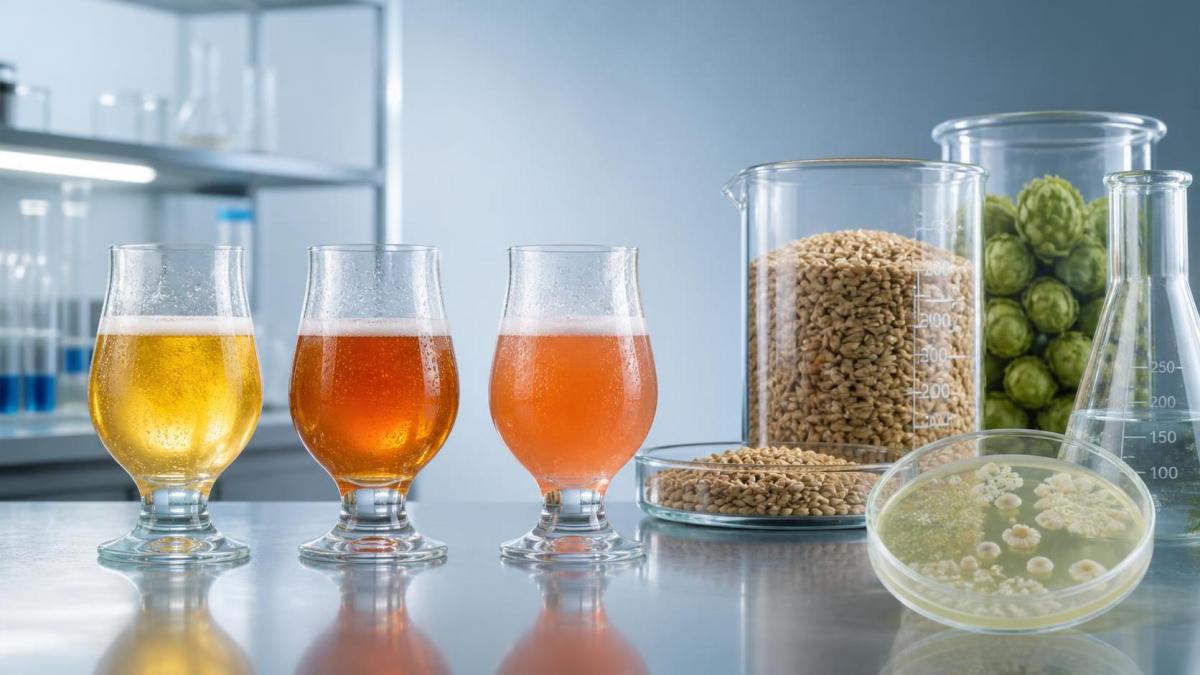
If you have already thought of a name for that beer, or have a coffee-stained napkin covered with ideas in hand, you are welcome to apply for free beer samples—we do not offer universal formula templates, but we can help you turn that thought of “what it should taste like” into a real can sitting on the shelf.