How long does beer ODM formulation development generally take? Key timeline milestones from formula confirmation to pilot-scale production
Aug 31, 2026
How long does beer ODM beer-base R&D generally take? From formula confirmation and flavor adjustment to pilot-scale production, the timeline varies depending on process complexity and customization requirements. This article details the key milestones and acceleration strategies drawn from Yangchun Beer's 39 years of practical craft beer ODM experience.
For overseas buyers, chain brewpub brand owners, or cross-border trading companies, “how long does beer ODM beer-base R&D generally take?” is not merely a process inquiry; it is the starting point for assessing supply chain timing. It directly affects new product launch windows, peak-season inventory planning, sample feedback cycles, and even channel stocking decisions and working capital efficiency. In actual business operations, we have found that many customers mistakenly equate “R&D” with simply “adjusting a flavor.” As a result, after the flavor is finalized, they encounter delays in stability testing, filling compatibility, or export compliance, postponing overall delivery by 4–8 weeks. What truly determines the timeline is never the stirring speed in the laboratory, but three hidden variables: raw material availability, process compatibility, and the depth of regulatory adaptation.
The formula confirmation stage usually takes 2–6 weeks, although the differences can be substantial. For mature beer bases such as basic lager or German-style wheat beer, if the customer accepts a comparable version from Yangchun’s more than 300 existing process reserves, the formula can be finalized after only 1–2 rounds of small-sample adjustments. However, where functional additions are involved, such as oyster peptide or hyaluronic acid, or where high-syrup substitution is used in zero-sugar, zero-fat systems, raw material import filing, thermal stability verification, and pH-turbidity coordination testing must be initiated simultaneously. This part is often overlooked, yet it is a critical prerequisite for EU CE certification and U.S. FDA label review. When serving a Nordic customer last year, the customer required seaweed extract to enhance mineral character. The precipitation risk assessment of this ingredient in the beer matrix alone took 11 working days, far longer than the flavor adjustment itself.
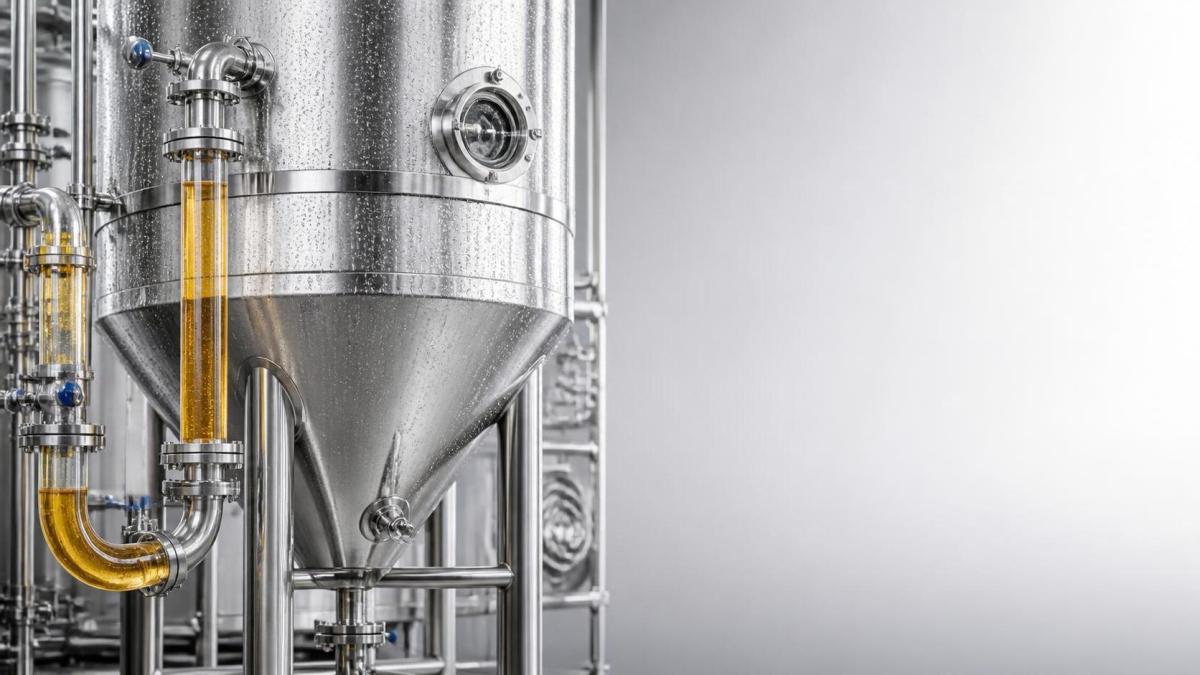
Pilot-scale expansion is the real dividing line. Many customers assume that data from a 50 L trial tank can be directly transferred to a 20 HL production line, but this is not the case. Yeast generational activity decline, changes in cold-break sedimentation rates, and shifts in CO₂ solubility caused by tank geometry—these physical parameters only become apparent during hectoliter-scale pilot trials. Yangchun uses a “dual-track pilot method”: traditional conical tanks and modular microbrewing units operate simultaneously. The former verifies process robustness, while the latter rapidly iterates packaging compatibility, such as the impact of aluminum bottle inner-wall coatings on fruit-flavor volatility. This stage takes 3–5 weeks on average. However, if the customer specifies non-standard packaging, such as high-alcohol fruit beer in PET kegs, an additional 2 weeks are required for filling-line compatibility verification; otherwise, foam overflow or shortened shelf life can easily occur during mass production.
The final 10% of variables before mass production are often hidden in the most inconspicuous stages. For example, after flavor samples of a yuzu IPA exported to Japan passed review, we found during pilot trials that its bitterness units (IBU) declined by 18% after three months in glass bottles, while the decline was only 5% in cans. This resulted from the influence of bottle-cap liner material on the oxidation rate of α-acids. Such issues cannot be resolved through theoretical extrapolation and must rely on comparisons with historical batch databases. Since 2015, Yangchun has developed a full-chain flavor attenuation model covering 12 types of packaging materials, 7 combinations of storage temperature and humidity, and regulatory thresholds across 5 major export markets. This has shifted mass-production release decisions from “experience-based judgment” to “data-threshold triggers.”
Accelerating the process does not mean compressing necessary stages; it means identifying risks earlier. For foreign trade customers, we establish “three-stage freeze points”: formula freeze, including the raw material traceability list; pilot freeze, including the packaging compatibility report; and compliance freeze, including pre-review comments on target-country labels. If any stage fails to meet requirements, subsequent investment is suspended to avoid rework during mass production. Data show that customers adopting this mechanism reduce their overall R&D cycle by 22%, while their first mass-production qualification rate rises to 98.7%. Behind this is a “risk-zone map” created through reverse annotation of more than 2,700 failure cases accumulated over 39 years.
It is worth noting that flexibility in the timeline mainly exists in two blind spots. The first is the customer’s internal decision-making chain. One Southeast Asian alcoholic beverage group experienced a delay in flavor confirmation because its headquarters quality-control director was on leave for two weeks, ultimately missing the local Ramadan marketing window. The second is the absence of raw material substitution plans. During the European barley production decline in 2023, several customers had not agreed in advance on substitute varieties, such as Canadian two-row barley versus French winter wheat. They were therefore forced to redo their mashing curves, extending the timeline by more than 3 weeks.
For buyers or brand owners evaluating ODM cooperation, the real question should not be “what is the fastest possible timeline?” but rather “which milestones have the lowest tolerance for error?” The formula stage has the highest tolerance for error, as adjuncts can be replaced quickly. The pilot stage has moderate tolerance, as production-line schedules need to be coordinated. Compliance document submission and initial packaging sample confirmation have the lowest tolerance for error: once a label filing number has been issued or acceptance of the first aluminum bottle mold batch has been signed off, any change will trigger a full order re-review. This is why we recommend that foreign trade customers reserve at least 45 days of buffer time rather than simply calculating the number of R&D days.  Industry trends are intensifying this complexity. Newly introduced global standards for low-alcohol beer, such as the EU requirement effective in 2024 for mandatory distillation-method verification for Alc. Vol ≤0.5%, and new microbiological limit regulations for plant-protein additions in emerging markets, such as the Saudi SASO 2025 draft, are turning compliance verification from a “one-time action” into a “dynamically embedded process.” This means that the stability of future beer ODM beer-base R&D timelines will increasingly depend on whether a contract manufacturer has cross-regional regulatory response capabilities, rather than brewing technology alone.
Returning to the original question: how long does beer ODM beer-base R&D generally take? The answer is not a number, but a decision-making framework. It depends on whether you are reusing a standardized process or seeking a unique solution under the fourfold constraints of regulations, raw materials, packaging, and flavor. Among the 1,000+ brands served by Yangchun, 73% of timeline fluctuations stem from the clarity of customer requirement definitions rather than technical bottlenecks. When a requirement document states, “We want the full body of a Belgian abbey beer, but the alcohol content must be ≤3.8% and wheat cannot be used,” the real R&D has only just begun.
Industry trends are intensifying this complexity. Newly introduced global standards for low-alcohol beer, such as the EU requirement effective in 2024 for mandatory distillation-method verification for Alc. Vol ≤0.5%, and new microbiological limit regulations for plant-protein additions in emerging markets, such as the Saudi SASO 2025 draft, are turning compliance verification from a “one-time action” into a “dynamically embedded process.” This means that the stability of future beer ODM beer-base R&D timelines will increasingly depend on whether a contract manufacturer has cross-regional regulatory response capabilities, rather than brewing technology alone.
Returning to the original question: how long does beer ODM beer-base R&D generally take? The answer is not a number, but a decision-making framework. It depends on whether you are reusing a standardized process or seeking a unique solution under the fourfold constraints of regulations, raw materials, packaging, and flavor. Among the 1,000+ brands served by Yangchun, 73% of timeline fluctuations stem from the clarity of customer requirement definitions rather than technical bottlenecks. When a requirement document states, “We want the full body of a Belgian abbey beer, but the alcohol content must be ≤3.8% and wheat cannot be used,” the real R&D has only just begun.