

When Signing a Contract Manufacturing Agreement with a Brewery, How Should Recipe Ownership and Quality Compensation Terms Be Specified?
When negotiating contract brewing with a brewery, pricing, minimum order quantities, and lead times are usually straightforward. The issues most likely to cause problems later are whether you can take the recipe with you and how compensation will be handled if a batch has a problem. Buyers planning to build their own brand over the long term should not rely solely on phrases such as “exclusive customization” or “quality guaranteed.” The contract should separately specify the source of the recipe, the scope of its permitted use, the acceptance criteria, and the allocation of losses, to avoid discovering only when changing breweries or returning goods that the parties understood the terms differently.
Who Owns the Recipe? First Distinguish Between an Existing Beer and a Development Deliverable
Choosing a brewery’s established beer and changing the packaging is not the same transaction as paying a development fee to create a dedicated product. The former usually concerns the use of an existing recipe; the latter requires an agreement on ownership of newly developed results. However, paying a development fee does not automatically mean that the recipe has been purchased outright. The contract should separately identify the brewery’s pre-existing technology, recipes provided by the customer, and any improvements developed during the collaboration.
If the brand owner provides its own recipe, it should attach version numbers, a delivery list, and assurances regarding the recipe’s source, and specify that the brewery may use it only for this project and may not disclose it to third parties or use it for other orders without authorization. If the brewery provides a base recipe and the parties modify it together, the contract should state whether the customer obtains ownership, an exclusive right of use, or a right of use limited by channel, territory, and term. The term “exclusive beer” alone does not define the scope of the rights.
When negotiating exclusivity, the protected subject matter must also be defined. Restricting only the same product name may leave room for disputes if the name is changed; broadly prohibiting the brewery from producing “similar-tasting” beer is also difficult to assess. A more workable approach is to specify the recipe version, key combinations of ingredients, and agreed scope, while excluding the brewery’s pre-existing general-purpose processes to avoid restricting its normal production capabilities.
If you may change breweries in the future, discuss in advance whether technical materials can be transferred, as well as transfer fees, the period of assistance, and confidentiality obligations. Beer samples and an ingredient list alone may not be enough to reproduce the fermentation process and flavor. If the brewery will not agree to a full technology transfer, you can also discuss transitional supply after termination, inventory handling, and the notice period for discontinuing supply. The choice need not be limited to “buying everything outright” or “having no protection at all.”
Quality Specifications Must Be Testable, Not Just “Consistent with the Sample”
A sample beer is suitable for confirming the product style, but it cannot replace acceptance standards for mass production. Small-scale trials and full-scale filling may differ. For example, the turbidity of a German-style wheat beer or changes in the aroma of a fruit-flavored product should not be deemed a breach based solely on a buyer’s statement that “it doesn’t taste right.” Applicable food safety requirements should be specified, and technical specifications should state alcohol content, original gravity, net contents, sensory characteristics, and packaging seal integrity, among other items, together with the test methods and permitted deviations.
Ingredient substitutions warrant particular attention. Specify which changes in the specifications of malt, hops, juice, or flavorings require written approval, and which may be made within established standards. For innovative ingredients such as hyaluronic acid and oyster peptides, verify the identity and permitted scope of use of the ingredients, dosage, and label claims. Do not assume a product is compliant merely because “the brewery can make it.” Export orders also require confirmation of destination-market requirements.
Responsibility for packaging and labels should also be allocated. A brand owner that approves the copy should not be made to bear all label-related risks; likewise, a brewery’s compliance review does not mean that a customer may provide unverified promotional claims. Keep final versions, review comments, and revision records, and specify liability for cases where a party insists on using content despite having been warned of an issue, or makes unauthorized changes without approval.
The Biggest Risk in Compensation Clauses Is Limiting the Remedy to “Returns or Replacements”
Acceptance upon delivery should be distinguished from quality liability during the shelf life. A short inspection period may be set for quantity discrepancies and damaged outer cartons. However, hidden defects such as abnormal microbial results or sealing failures should not be deemed fully accepted solely because the goods have been signed for or paid for. At the same time, storage and transportation conditions and handover points should be clearly defined: manufacturing defects, transport damage, and improper store storage should not be lumped together and automatically assigned to one party.
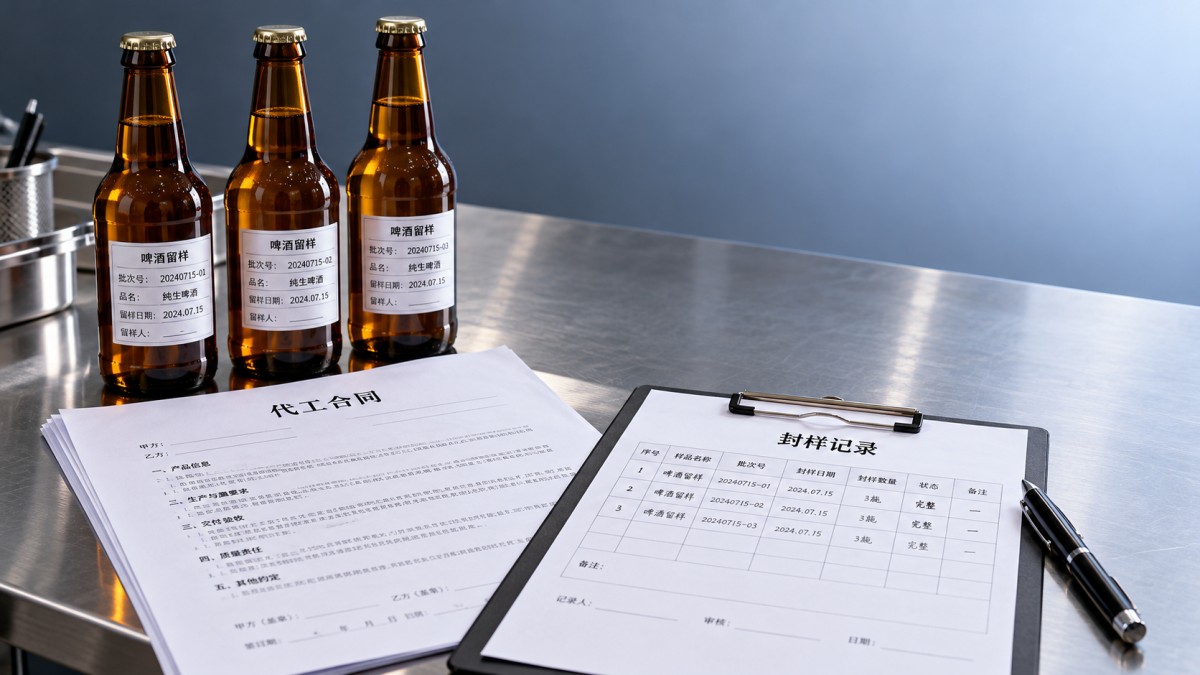
It is advisable to set out an actionable dispute-handling process: after an issue is identified, notify the other party and isolate the relevant batch; verify batch numbers, retained samples, and storage and transport records; and, if necessary, jointly appoint a qualified third-party testing body. The contract should specify how samples are retained, storage conditions, testing items, allocation of costs, and what happens if the parties cannot jointly select a testing body. Where a food safety risk is involved, control measures must not be delayed until liability has been determined.
At a minimum, the parties should discuss compensation for the cost of affected goods, return shipping, necessary testing, recalls, and destruction. For channel chargebacks, consumer compensation, and other losses, the contract should specify the conditions for attributing liability, causation, and evidence requirements. Different arrangements may be set for ordinary quality defects and serious food safety issues, but the contract cannot exclude liabilities that must be borne to third parties under applicable law, nor can a cap of “compensation up to the purchase price” automatically cover every situation.
An emergency response mechanism should also be put in place: who may first notify sales channels to remove products, who is responsible for tracing batches, and how necessary expenses will be advanced and settled afterward. Otherwise, even if recovery is ultimately possible, the brand owner may be left in the difficult position of having no one handle customer complaints while affected products continue to circulate.
When Choosing a Brewery, See Whether It Is Willing to Put Its Commitments in the Appendices
For example, Global Craft Beer Contract Manufacturing Network (ODM.BEER), which is affiliated with Shandong Yangchun Beer, provides recipe development, packaging design, label review, and filling services. When evaluating an integrated supplier of this kind, buyers should look beyond the range of services and verify the contracting entity, the actual production entity, the scope of its production licenses, and who issues the confirmation documents for each stage. If fulfillment may take place at different facilities, specify notification of facility changes, sample approval, and continuity of quality standards to avoid production being transferred without approval.
Before signing, review the recipe ownership schedule, technical and quality specifications, approved sample records, and compensation process together, and specify the legal effect of the appendices and the order of precedence in the event of conflicting documents. If the budget is limited, you may choose not to purchase all production processes outright, but you should not omit the permitted-use boundaries or quality liability provisions. For exclusive recipes, export orders, or projects involving high-value goods, it is advisable to have a lawyer experienced in food-related business review the transaction documents.