

For a first-time beer contract manufacturing order, the process from confirming the recipe to delivering the finished product generally includes discussing requirements, approving samples, finalizing packaging and labels, scheduling production, brewing and filling, pre-shipment inspection, and logistics and delivery acceptance. Some tasks can proceed in parallel, but bulk production should not begin until the beer, packaging materials, and acceptance standards have all been confirmed. Otherwise, even if the sample tastes satisfactory, the finished product may still differ from expectations in taste, packaging, or delivery time.
For beverage distributors, bar owners, or corporate gift buyers launching their own brand for the first time, three questions should be clarified first: what product they expect to receive, which stages they need to approve themselves, and what criteria will be used to address any deviations. Including these details in written confirmation documents is more useful than asking only how much each bottle costs and how many days delivery will take.
Clarify the requirements first so recipe discussions have a clear direction
“We want to make a good-tasting wheat beer” is not enough to begin accurate sample development. The factory needs to know who the product is for, where it will be consumed, the expected retail price range, and the preferred aroma, bitterness, sweetness, and body. Requirements for packaging, shelf life, and storage and transportation conditions may differ for beer served on-site at bars, ambient retail sales, and corporate gifts. All of these factors can affect the process and quotation.
For the initial discussion, requirements can be organized into a one-page brief covering beer style, target alcohol content, flavor profile, packaging format, initial order quantity, sales region, and expected delivery date. For items that are not yet clear, the factory can be asked to provide options, but the final selections should be recorded in writing. For products involving fruit juice, special ingredients, or functional claims, first assess whether the ingredients can be used, how the product should be classified, and whether the proposed label wording is permissible. This helps avoid rework after the design is complete.
At this stage, it is also important to distinguish between two approaches: when using an established beer base, the main task is to confirm whether its existing flavor profile is a good fit; when developing a new recipe, time should be allowed for recipe adjustments and additional sampling. A factory's ability to accept small orders does not mean that the same minimum order quantity applies to every beer base and packaging format. Ask separately about brewing batch sizes, filling requirements, and purchasing quantities for customized packaging materials.
Approve samples and keep records that can be used for production and acceptance
When receiving samples, avoid feedback such as “it's good” or “make it a little crisper.” Taste them at a temperature close to the actual serving temperature and record the aroma, initial bitterness and sweetness, body, carbonation, and finish. If adjustments are needed, describe the specific direction as clearly as possible. When several people are involved in the decision, one person should consolidate the feedback to avoid sending the factory conflicting requests.
Also ask where the sample came from: is it a finished product from existing stock, a small R&D sample, or a trial batch made using the intended production process? Different samples can demonstrate different things. A reference sample can help define the style, but changes to the recipe, production scale, or pasteurization method may affect the final flavor. A single reference beer should not be taken as a guarantee that the bulk product will be exactly the same.
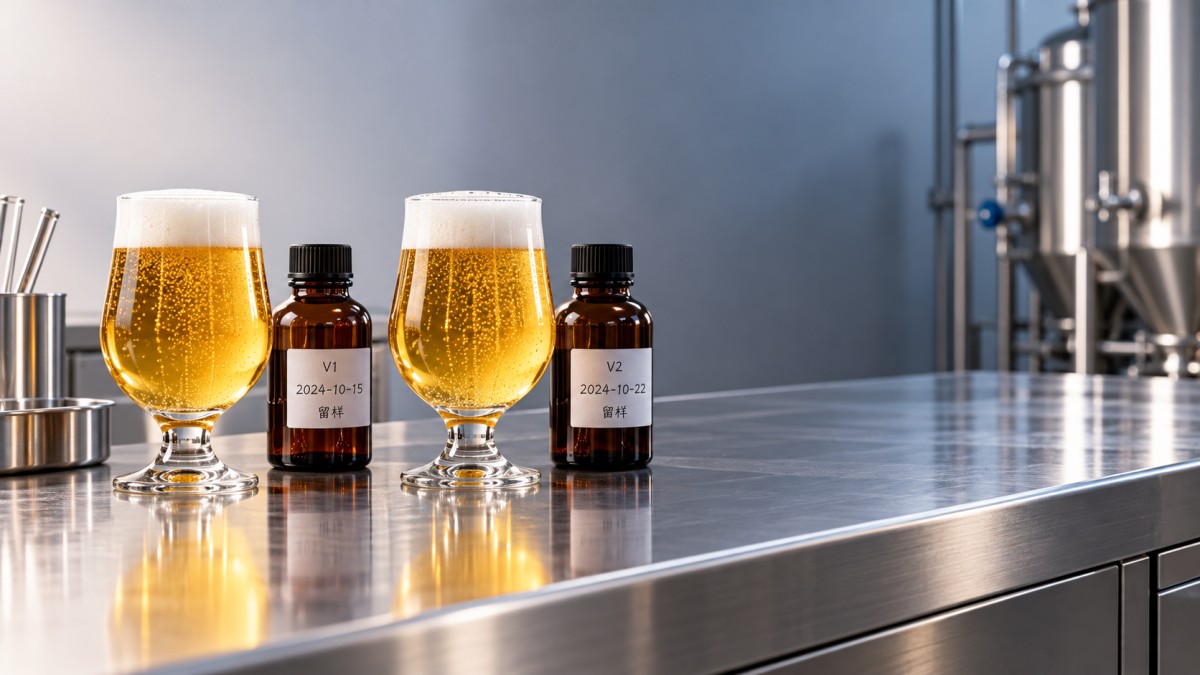
Formal approval should cover both sensory descriptions and verifiable specifications. Agreed specifications, such as alcohol content and original gravity, and their acceptable ranges should be consistent with the product's applicable requirements and the factory's testing capabilities. Both parties should retain an approved sample, labeled with its version, date, and storage conditions, and agree on how sensory disputes will be reviewed. Beer flavor changes during storage, so retained samples must also be assessed in light of the storage period.
Connect packaging finalization and production scheduling to avoid delays between dependent steps
Once the beer is approved, packaging design, label review, and packaging material preparation need to be coordinated. Bottle or can type, capacity, closures, outer cartons, and pack size all affect costs and production arrangements. For special bottle shapes, custom-printed cans, or dedicated gift boxes, confirm lead times, minimum order quantities, and who will store and bear the cost of any remaining packaging materials in advance.
Labels should undergo a compliance review before printing. Key items to check include the product name, ingredients, alcohol content, net content, manufacturer information, date marking, and storage conditions, with requirements reviewed according to the product category and sales region. Nutrition claims, statements about special ingredients, and export labels also require separate assessment and should not simply reuse the artwork of another product.
There is also an approval step between the digital artwork and the physical product. Colors, font sizes, barcode readability, date-code location, and label application should all be checked during proofing or first-article approval. Both parties should also agree on how materials already purchased will be handled if the packaging design is changed after final approval.
When placing an order, specify not only the unit price and quantity, but also packaging material costs, payment milestones, delivery location, freight costs, permitted quantity variances, and how exceptions will be handled. It is best to break the delivery schedule into trackable milestones: beer formulation approval, packaging materials arriving at the factory, production start, inspection release, and dispatch. Asking “From what date is the lead time calculated?” is more useful than receiving only a total number of days.
Inspection release and delivery acceptance still remain after production
Once production begins, the beer must be brewed, fermented, and further processed according to the approved process before it is filled and packaged. The specific steps and timeline depend on the beer and production process. Buyers can agree in advance on how progress updates will be provided and clarify how changes to the recipe, ingredients, or packaging must be approved. When working to meet an event deadline, allow time for inspection and transportation; the day filling is completed should not automatically be treated as the date the product is ready for sale.
Before dispatch, finished-product inspection should be completed as agreed, with the product batch, quantity, packaging condition, and accompanying documents checked. The inspection items covered by the finished-product report should be clarified when signing the agreement. For orders requiring special testing, agree in advance on the testing organization, sampling method, costs, and release conditions to avoid additional requirements being raised only after the finished products have been put into storage.
Logistics arrangements should follow the storage and transportation conditions stated on the product label. Whether a cold chain is required and how to protect the product from sunlight and breakage during transport should be determined based on the specific product. Upon receipt, first check the batch and quantity, then inspect the outer cartons and cans or bottles for damage or leaks, and take samples as agreed to check the labels, dates, and condition of the beer. If any issues are found, retain photos, batch information, and samples, and report them within the agreed timeframe.
Before concluding discussions for the first order, ask the factory to link the beer approval form, finalized packaging files, and order delivery terms to the same product version. On delivery, the buyer can then determine whether the product received matches what was originally approved, which deviations are acceptable, and which require action by the factory. This also provides a clear starting point for the next order.