

When purchasing the same beer, some manufacturers can handle small orders in kegs, while others require a full batch of cans. The difference often comes down to the beer, packaging materials, and production scheduling. Buyers should first determine whether the order can use an established beer, existing packaging, and a production schedule that can accommodate it. The closer the requirements are to an existing production plan, the more feasible small-batch production is.
For a trial launch, a low minimum order quantity can help control inventory, but it does not necessarily mean the lowest trial cost. When requesting a quote, consider “the minimum purchase quantity” alongside “whether this batch can support channel testing,” and clarify the replenishment terms to avoid being able to fulfill the first order but unable to restock once sales take off.
Why minimum order quantities vary: an order may face three constraints
The first is the beer itself. Using a manufacturer’s established formula may allow the order to fit into an existing production schedule. Adjusting the ingredients, flavor, or process specifically for the order may require trial production, a dedicated brewing run, and tank capacity. Even when the finished quantity is the same, the two options require different production resources. When asking about the minimum order quantity for the beer, clarify whether it refers to a dedicated brewing batch or the quantity to be packaged from an existing beer.
The second is packaging. The purchasing terms for standard containers with a suitable label solution may differ significantly from those for specially printed cans, bottles, or cartons. A brewery’s willingness to fill a small order does not mean its packaging suppliers will accept the same quantity. Who pays for excess packaging, who owns it, and how it will be stored all directly affect the cash tied up in the first order.
The third is filling and changeovers. Changes in packaging specifications may require equipment adjustments, cleaning, setup, and production loss. The smaller the order, the harder it is to spread these costs. A manufacturer willing to accept a small order may still require specific packaging, consolidated production scheduling, or a higher unit price.
Therefore, before comparing minimum order quantities, standardize the basis of measurement to deliverable finished products with “the same beer, the same packaging specifications, and the same label version.” Do not rely on marketing statements alone to determine whether “one batch per order” allows mixed flavors or whether “one keg per order” includes a custom formula and packaging.
First decide what the trial is intended to validate, then choose a small-batch option
If the goal is for a bar to test the flavor and performance by the glass, an established beer paired with a suitable keg option can reduce investment in packaging development. However, check the keg coupler, dispensing equipment, storage requirements, and arrangements for using the keg after it is opened. Feedback from a keg trial mainly reflects that drinking occasion and cannot directly replace retail testing in supermarkets or e-commerce channels.
If you plan to enter retail channels, the trial product should be as close as possible to the form intended for subsequent sales. Capacity, label information, outer-carton configuration, and shipping method may all affect listing and sales. Testing whether a flavor is popular in temporary packaging is not enough to prove that customers will also accept the price and packaging of the final product.
Orders for corporate gifts, holiday events, and similar purposes are more constrained by delivery dates. Even when quantities are small, custom designs, label reviews, and packaging production still take time. In this case, prioritize combinations of established beers and available packaging, leaving the limited lead time for design approval and delivery.
Tasting beer samples can help narrow down flavor options, but before placing an order, specify in the purchase order the beer, alcohol content, packaging, and storage requirements that correspond to the approved sample. Also clarify whether the sample and mass production will use the same specifications to avoid accepting the product based only on it “tasting about the same.”
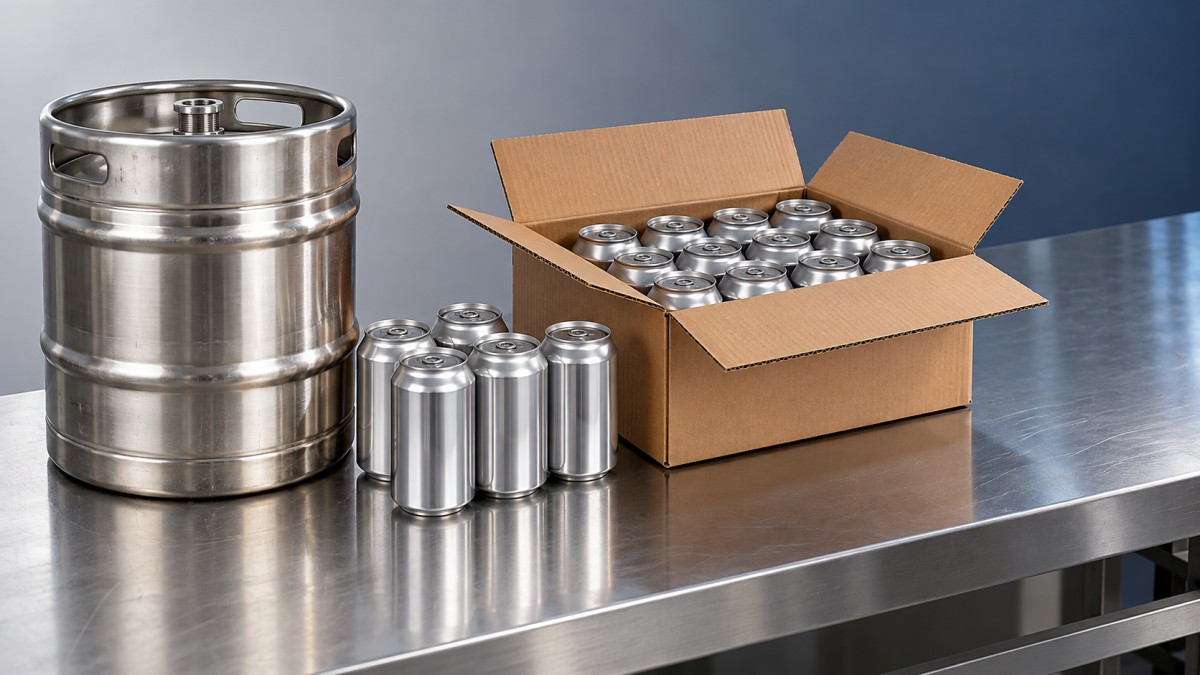
To determine whether a small order is cost-effective, calculate the cost per product that can actually be sold
Comparing only the ex-factory price per bottle can underestimate the initial outlay. A more practical calculation is: add the cost of the first batch of beer, packaging materials, development and sampling, logistics, and any agreed costs to be borne by the buyer, then divide by the expected sellable quantity. Products reserved for tastings, channel samples, or retention should be budgeted separately from sales inventory.
When requesting a quote from a beer manufacturer, ask for the following items to be listed separately:
- Beer and filling: Which beer will be used, whether containers, labels, and cartons are included, and whether the quote includes tax.
- Development and packaging: Whether formula adjustments and design samples are charged separately, and how remaining custom-printed packaging will be settled and stored.
- Warehousing and transportation: Delivery location, how freight costs are allocated, and whether there are charges for temperature control, pallets, or split shipments.
- Acceptance and after-sales service: How quantity discrepancies, shipping damage, and quality claims will each be handled, and what supporting documents must be retained.
In particular, distinguish between “the quantity of packaging materials purchased” and “the quantity of finished products delivered in this order.” If a large quantity of custom-printed packaging is prepaid for a small finished-product order, the inventory pressure has simply shifted from beer to packaging. Agree in advance whether the remaining packaging can be used for subsequent orders and how it will be handled if the design changes.
When budgets are tight, reducing the number of flavors and packaging versions in the first order often offers more practical flexibility than repeatedly pushing down the unit price. Multiple versions may each trigger minimum quantities and changeover fees, while also fragmenting trial samples and making it harder for the buyer to determine which product is worth restocking.
Clarify lead times and replenishment terms before committing to the first order
The order should clearly specify the point from which the lead time is calculated: payment, final design approval, completion of label review, or arrival of packaging materials at the factory. An answer stating only how many days production takes does not account for the preparation time beforehand. For a trial with a fixed launch date, work backward through design, material preparation, production, transportation, and acceptance, and agree on how delays will be handled.
At receipt, also check the remaining shelf life. The order should specify the product’s shelf life and storage conditions, as well as any requirements for the production date or remaining shelf life at delivery. If a trial channel has slow turnover, even a low minimum order quantity can increase the risk of returns and the need for promotions if there is too little time left for end-customer sales.
Replenishment terms also affect the value of the first order. If the initial small supply depends on ad hoc scheduling, subsequent orders may not be available in the same quantities, at the same price, or within the same lead time. Buyers should ask in advance about the minimum quantity for repeat orders, lead times, controls for beer consistency, and whether remaining packaging can continue to be used.
When two manufacturers have noticeably different minimum order quantities, first request quotes again using the same requirements: fix the beer, packaging, delivery location, and timing, then compare the total outlay and replenishment arrangements. Only when these conditions are consistent does a “lower minimum order quantity” offer a meaningful basis for comparison; otherwise, the quantities may simply reflect the thresholds of two different solutions.