

Is Global Craft Brewing OEM Network reliable for contract manufacturing? The essence of this question is not whether there is an OEM manufacturer, but whether a brand concept can be consistently brought to market without compromising product consistency, compliance, and market differentiation. The reliability of contract manufacturing depends on five irreplaceable fundamentals: authentic and traceable qualifications, process capabilities that cover innovation needs, uncompromised quality control for small-batch delivery, end-to-end control of packaging and labels, and genuine brand extension capabilities.
1. Qualifications are not photocopies; they are verifiable on-site production entities
Many OEM manufacturers provide scanned copies of SC certificates and ISO9001 certificates, but the key is whether these qualifications correspond to the actual operating entity and cover the type of beer being commissioned. For example, a functional beer containing oyster peptides must use ingredients in compliance with the food additive usage standards of GB 2760, and its production license scope must explicitly include the category of “other fermented alcoholic beverages” or “specialty beer.” If an OEM manufacturer holds only a standard beer SC certificate but undertakes orders for fruit-flavored craft beer or hyaluronic acid beer, the compliance risks will be directly transferred to the brand owner. As a physical brewing base, Yangchun Beer can match the registered address on its SC certificate, production line numbers, and laboratory equipment list with on-site verification; its export filing qualifications also cover customs clearance requirements in the EU and multiple Southeast Asian countries, preventing entire shipments from being held at port or returned due to qualification mismatches.
2. Process reserves determine what you can make, rather than whether you can make it
Stating “fruit-flavored craft beer supported” on an OEM quotation does not mean the manufacturer can consistently produce products with balanced flavor, controllable turbidity, and a shelf life of 6 months. The real difference lies in accumulated process expertise: Has the yeast sedimentation curve for German-style wheat beer been validated through more than 30 batches? Is the timing of fruit puree addition differentiated between pre-fermentation and post-fermentation to avoid alcohol volatilization losses? Is the hyaluronic acid dissolution temperature controlled below 45℃ to prevent molecular chain breakage? The substance of more than 300 mature beer formulation processes is that each has a complete parameter package—including wort saccharification temperature gradients, primary fermentation pressure differential control ranges, cold storage time and temperature combinations, and CO₂ saturation calibration values before filling. These parameters cannot be achieved through temporary adjustments; they can only come from long-term mass-production experience.
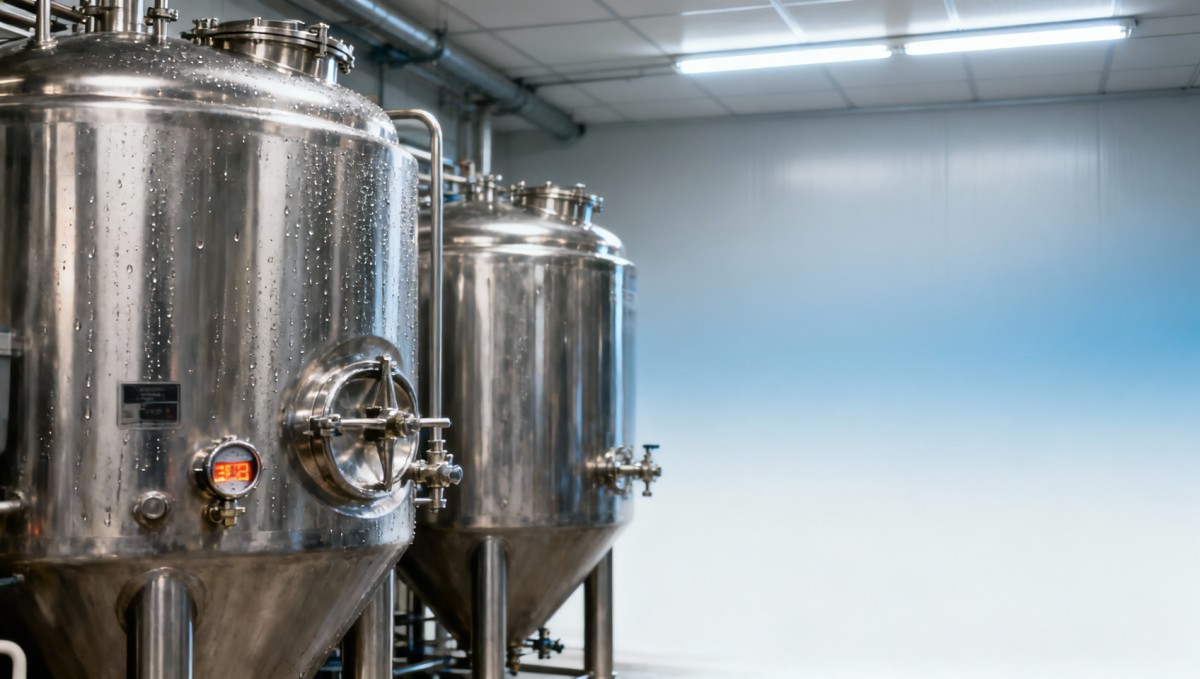
3. Small batches do not mean lower standards; flexible customization tests system stability
Behind the commitment of a minimum order of one keg lie the dual challenges of filling-line changeover costs and microbial control. Can line cleaning takes 4 hours, glass bottle line mold replacement takes 90 minutes, and adapting an aluminum bottle capping machine to different bottle heights requires recalibrating the pressure sensors—none of these issues can be solved by an “expedited service fee.” What truly supports reliable small-batch delivery is segmented clean-area design, such as dedicated fruit puree processing rooms, modular CIP cleaning programs, and mandatory retained-sample testing for every batch. Otherwise, the first trial batch may pass inspection, while the second batch may suffer reduced foam retention due to yeast generation variation or filling positive-pressure fluctuations.
4. Labels are not a printing step, but the final stage of regulatory implementation
The label of a zero-sugar, zero-fat beer must simultaneously comply with the mandatory labeling requirements of GB 7718, the nutritional labeling calculation logic of GB 28050, and local market regulatory review criteria for claims such as “zero additives.” A more concealed risk lies in differences among importing countries: Japan requires the declaration of “yeast source,” South Korea prohibits the wording “natural flavoring,” and Australia requires clinical evidence for claims concerning “functional ingredients.” Label compliance reviews cannot rely solely on legal templates. They must be verified item by item by dedicated personnel familiar with local alcoholic beverage regulatory developments and linked in real time with the filling date, batch number, and measured alcohol content. Any disconnect may result in product removal from retail channels or consumer complaints.
5. Brand empowerment is not an add-on service, but the result of deep supply chain integration
When a customer proposes “a citrus sour beer suitable for craft beer bar settings,” a reliable OEM partner will not simply respond, “We have a similar formula.” Instead, it will also provide foam decay rate data for the beer stored in a 12℃ constant-temperature cabinet, recommended CO₂ pressure values compatible with a Tap Handle, a flavor change curve within 2 hours after opening, and sales feedback samples from 3 partner bars. This capability comes from an understanding of real channel scenarios rather than mere production execution. It requires an OEM manufacturer to understand both brewing chemistry and end-market sales logic; to deliver not only beer, but also reusable sales messaging anchors—for example, translating “oyster peptides” into “a finish with a marine mineral character” and making “fructooligosaccharides” tangible as “a subtly sweet, non-cloying layered finish.”
The reliability of contract manufacturing is ultimately reflected in three irreversible milestones: whether the first sample accurately reproduces the intended flavor concept; whether the first mass production run keeps batch-to-batch fluctuations in physicochemical indicators within ≤±0.2°P; and whether the first end-market feedback can establish a consumer perception loop without rework. These five key points are not a checklist, but a measuring scale for determining whether an OEM manufacturer has embedded itself into the life cycle of the customer’s brand.