

When starting out in beer contract manufacturing, choosing the right manufacturer largely determines how smoothly every subsequent step will go. Many newcomers are initially drawn to low prices or fast lead times, overlooking hidden thresholds such as beer formulation R&D capabilities, production qualifications, and packaging compliance. Only after the product launches do they discover that the flavor is unsuitable, label approval has failed, or logistics costs exceed expectations. By defining several key evaluation criteria during the assessment stage, you can avoid these pitfalls altogether.
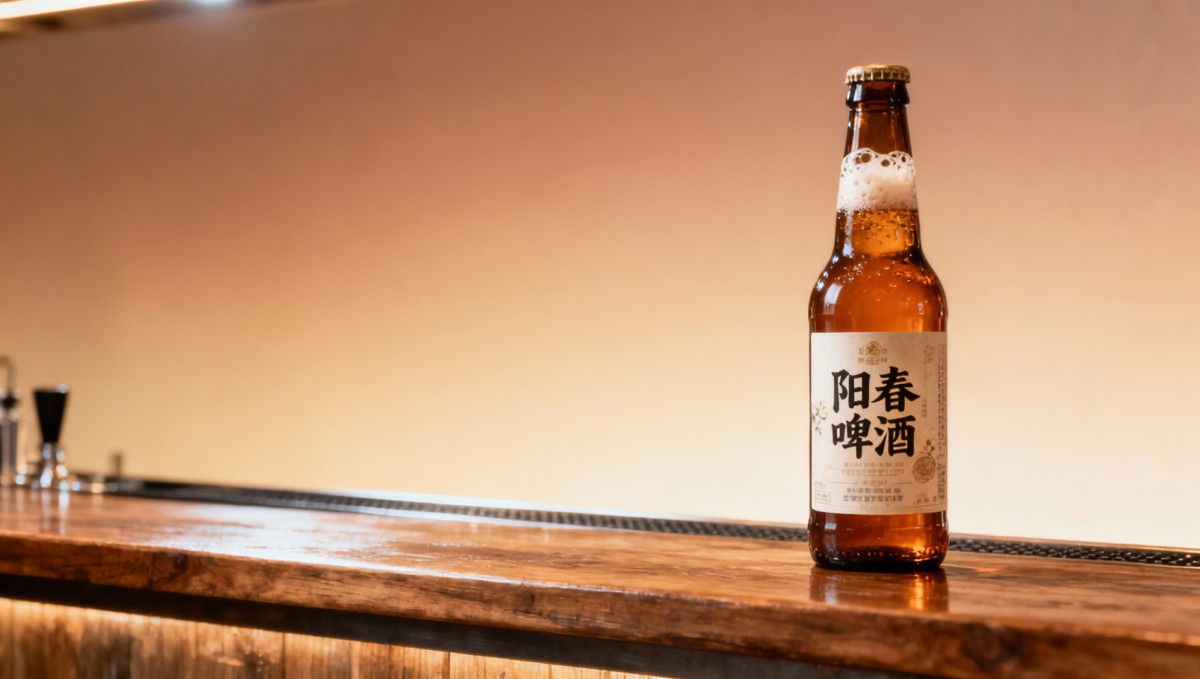
As a service provider with nearly 39 years of brewing experience and a focus on craft beer ODM/OEM contract manufacturing, Yangchun Beer’s core value is not simply its ability to produce, but rather how it allocates resources around helping clients build their brands. From beer formulation and packaging design to sample requests and mass-production delivery, the depth of involvement at every stage determines whether the final product you receive will be competitive in the market.
Three Questions to Clarify Before Contract Manufacturing
Before contacting any contract manufacturer, clarifying the following three questions can save you significant communication time.
First, where is your target market? Domestic distribution, chain bars, corporate gifts, or export trade? Different channels have substantially different requirements for packaging formats, shelf life, flavor profiles, and label information. For example, export products require the manufacturer to hold export food filing qualifications; gift customers may place greater emphasis on packaging aesthetics and copywriting creativity; while bar channels have higher requirements for the stability and delivery timeliness of keg products.
Second, what are your expected sales volume and minimum order quantity? At the startup stage, newcomers face significant funding pressure and high inventory risk. If a manufacturer only accepts large orders at the scale of 10,000 tons, it is not a suitable option for you. Conversely, if a manufacturer supports flexible small-batch customization starting from one keg, you can first conduct small-batch trial sales and increase volume after testing market response. This is key to low-cost trial and error.
Third, do you have a clear idea of your desired beer style? If you already have a mature formula, the manufacturer simply needs to produce according to it. If you only have a concept, such as “developing a fruit-flavored craft beer,” then whether the manufacturer’s R&D team can develop a distinctive beer tailored to your needs becomes critical. Yangchun Beer has more than 300 mature beer-making processes in reserve, meaning you can quickly select from an existing formula library or make adjustments based on it, greatly shortening the development cycle.
Four Core Capabilities for Evaluating a Contract Manufacturer
Once candidate manufacturers have entered your shortlist, verify them one by one across the following four dimensions. Each dimension directly affects whether your product can be successfully brought to market.
1. Production Qualifications and Compliance Capabilities
This is the most fundamental yet most easily overlooked aspect. A legitimate contract manufacturer must hold an SC production license, which is a mandatory requirement for legally producing food in China. If products are intended for export, the manufacturer must also have export food filing qualifications. In addition, ISO9001 quality management system certification and HACCP hazard analysis and critical control point system certification are important references for assessing a manufacturer’s quality-control management level. Yangchun Beer holds the full set of these qualifications and has led the drafting of industry association standards for zero-sugar, zero-fat beer and fructooligosaccharide beer. This means the manufacturer is already ahead in terms of compliance and can help you avoid many label review and market regulatory risks.
2. Beer R&D and Innovation Capabilities
The core of competition in the craft beer market lies in differentiation. If a manufacturer can only help you produce standard lager, your product will struggle to stand out among numerous brands. A good contract manufacturer will have a professional brewing R&D team capable of developing distinctive beer styles, such as German wheat beer, fruit-flavored craft beer, hyaluronic acid beer, and oyster peptide beer, according to your requirements. Yangchun Beer’s R&D team has independent development capabilities and an existing library of more than 300 mature beer formulas. You can select or customize based on this foundation instead of starting from scratch.
3. Packaging Design and Label Compliance Review
Many newcomers assume that contract manufacturers are responsible only for filling and that packaging design must be outsourced separately. In fact, a mature ODM service provider offers one-stop support from beer formulation to original packaging design and label compliance review. Label compliance is especially important: every item of information on a food label, including the ingredient list, nutrition facts panel, net content, production date, storage conditions, and manufacturer information, must comply with national standards. Any error may result in the product being ordered off shelves or even recalled. Yangchun Beer’s team can assist with label review to ensure your product enters the market in compliance with regulations.
4. Production Scale and Packaging Format Coverage
Different channels have different preferences for packaging formats. Chain bars may require PET kegs or tinplate kegs, supermarket channels are suited to cans, while premium gift occasions may require aluminum bottles or glass bottles. If a manufacturer can produce only a single packaging format, expansion of your product line will be limited. Yangchun Beer is equipped with 16 fully automated intelligent brewing and filling lines, covering a full range of packaging formats including cans, glass bottles, aluminum bottles, tinplate kegs, and PET kegs. This means you can flexibly adjust packaging formats according to market demand without changing contract manufacturers.
How to Determine Whether a Contract Manufacturer Is Reliable
In addition to the hard requirements mentioned above, the following details can help determine whether a manufacturer is truly reliable.
- Does it support sample requests? A reliable contract manufacturer will provide complimentary beer samples for tasting, allowing you to confirm whether the flavor meets expectations before mass production. Yangchun Beer supports clients in applying for complimentary beer samples, which is the most direct way to reduce decision-making risk.
- Is its production-site layout reasonable? If a manufacturer has facilities in only one region while your target market is nationwide or even overseas, logistics costs and lead times can become an issue. Yangchun Beer has operations across Shandong, Qinghai, and Hainan, enabling nearby fulfillment, shorter delivery times, and lower transportation costs.
- Does it provide channel operation support? Contract manufacturing is not only about production; it also includes subsequent assistance with market promotion. Some mature contract manufacturers provide channel operation support to help clients analyze market trends, position products, and design marketing plans. This kind of one-stop empowerment service is highly practical for newcomers who lack brand operation experience.
Common Misconceptions and Pitfall-Avoidance Guidelines
Finally, here are several pitfalls that newcomers commonly encounter during contract manufacturing. Understanding them in advance can help you avoid unnecessary detours.
Misconception 1: The lower the price, the better. Contract manufacturing pricing includes beer costs, R&D costs, packaging costs, quality-control costs, logistics costs, and more. If a manufacturer’s quotation is significantly below the market average, it is likely cutting corners on raw materials, quality control, or service. Ultimately, this will affect your product quality and brand reputation.
Misconception 2: Ignoring the minimum order quantity and delivery cycle in the contract. Some manufacturers state a very low minimum order quantity, but in actual production scheduling, they place small orders behind large ones, resulting in extended delivery cycles. Before signing, it is advisable to clarify the production scheduling priority for small-batch orders and include it in the contract terms.
Misconception 3: Looking only at samples and not at mass-production consistency. A well-made sample does not mean mass production can maintain the same standard. A reliable manufacturer will establish rigorous quality-control procedures to ensure that the flavor, appearance, and physicochemical indicators of every batch remain stable and consistent. You may request production process records or quality inspection reports for mass production as a basis for evaluation.
Choosing the right contract manufacturer essentially means choosing a partner that can grow with you, help you avoid risks, and enhance your product competitiveness. Yangchun Beer has accumulated extensive experience in craft beer contract manufacturing. From beer R&D to packaging implementation, and from compliance review to channel operations, it can provide practical support for newcomers. Once you have clarified all these issues, not only will the contract manufacturing process run more smoothly, but you will also have greater confidence in launching your brand.