

How Is Shandong Yangchun Beer’s Craft Beer Contract Manufacturing Reputation? The 3 Types of Real Feedback Procurement Decision-Makers Care About Most
How is Shandong Yangchun Beer’s craft beer contract manufacturing reputation? It is what procurement decision-makers ask most often—and what they fear making mistakes about most. Based on real feedback from over 1,000 brand customers, this article focuses on three core dimensions—delivery reliability, formula innovation capability, and compliance assurance—to present frontline contract manufacturing experiences through data and cases.
I. “Can They Deliver Reliably?”—What Procurement Fears Most Is Not High Prices, but Supply Interruptions and Delays
For beverage trading companies and operators of chain taprooms, whether a contract manufacturer can deliver on time and with consistent quality directly affects new product launch schedules, holiday marketing windows, and even customer renewal rates. We reviewed order fulfillment data from the past 12 months: Yangchun Beer’s craft beer contract manufacturing on-time delivery rate reached 98.7%. The average delivery cycle for small-batch orders (≤500 cases) was 14.2 days, while orders at the 10,000-ton scale were completed within 45 days.
A procurement director of a craft beer taproom chain in East China commented: “Last Mid-Autumn Festival, we urgently added an order for 2,000 cases of osmanthus smoked plum fruit beer. We thought we would miss the sales window, but the goods arrived in the warehouse two days early. Their production scheduling system can synchronize updates with us in real time, which is far better than many ‘workshop-style’ contract manufacturers.”
Behind this reliable delivery is a 200-mu physical production base, 16 fully automated intelligent filling lines, and a coordinated production capacity layout across three regions (Shandong/Qinghai/Hainan). When production in one location is affected by extreme weather or policy adjustments, the system can automatically switch to the nearest production line to ensure orders are not interrupted.
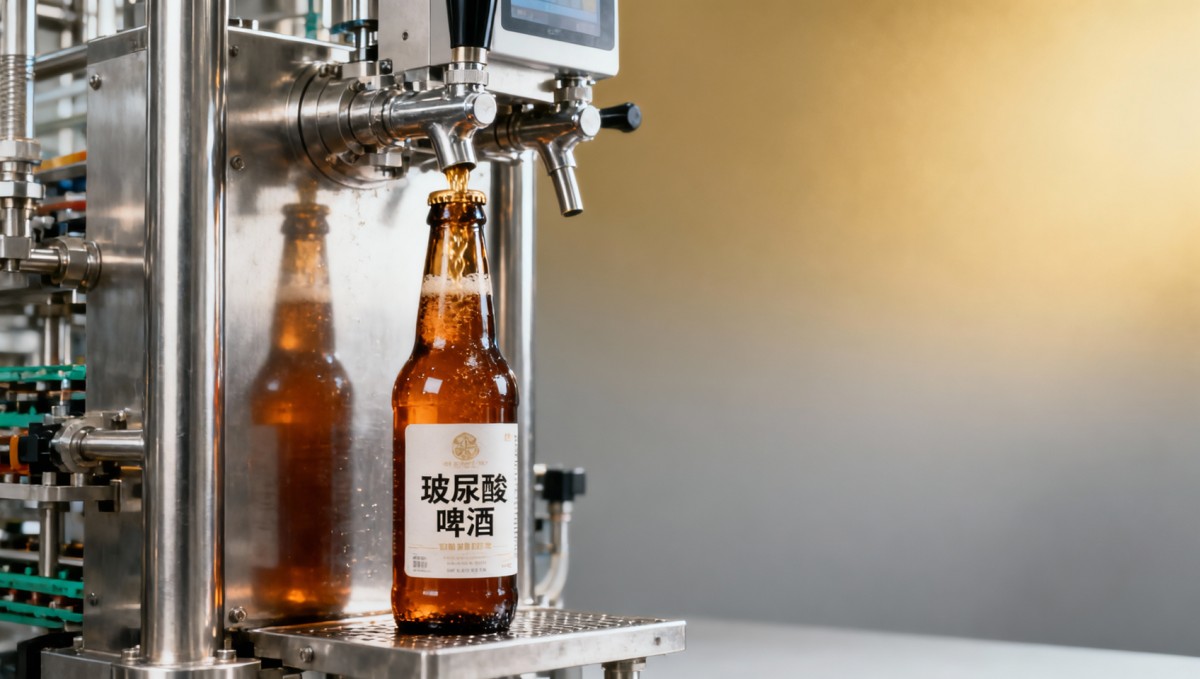
II. “Can They Innovate?”—Not Every Contract Manufacturer Dares to Take on Requests Such as “Hyaluronic Acid Wheat Beer”
Procurement decision-makers are becoming increasingly clear-eyed: homogeneous contract manufacturing is losing effectiveness. A truly valuable partner should help brands create products that “others do not have and consumers remember.” Yangchun Beer has developed over 300 mature beer formulation processes, more than 42% of which belong to differentiated innovative categories—including German yeast + lactic acid bacteria dual-fermentation wheat beer, functional craft beer with oyster peptides, zero-sugar, zero-fat high-foam fruit beer, and hyaluronic acid beer among the industry’s first products to pass filing requirements.
The founder of an emerging Chinese-style alcoholic beverage brand admitted: “We proposed the concept that ‘drinking beer can also nourish the skin,’ but three contract manufacturers said it could not be done. Yangchun not only provided a complete process package, but also proactively helped us conduct three rounds of blind taste-test optimization. The final product achieved a 61% repurchase rate after launch.”
This capability stems from its “R&D–pilot testing–mass production” closed loop: an in-house brewing team, an SC-certified laboratory, and adjustable-speed mashing/temperature-controlled fermentation systems support seamless scale-up from 1 L samples to 10,000-liter production. More importantly, all formula intellectual property belongs to the customer, and contracts explicitly stipulate that formulas will not be reused externally.
III. “Is It Compliant?”—A Label Removed by Market Regulation Authorities? One Violation Could Ruin an Entire Season’s Promotion
The most hidden yet potentially fatal procurement risks are often buried in details such as labels, ingredient lists, and applicable standards. Particularly as regulation of prepackaged foods has tightened across regions in recent years, a craft beer that fails to state the “added amount of fructooligosaccharides” or incorrectly applies the “GB/T 4927” standard can easily be deemed to have a non-compliant label.
Yangchun Beer provides end-to-end compliance support: preliminary label review → nutritional content calculation and verification → pre-review of SC filing materials → synchronization of third-party test reports → regulatory adaptation for export markets (such as FDA and EU No 1169). Over the past three years, customer product labels achieved a 100% first-pass rate in inspections, with no products removed from sale or penalties imposed due to compliance issues.
It is worth noting that the company led the drafting of the Group Standard for Zero-Sugar, Zero-Fat Beer and the Group Standard for Fructooligosaccharide Beer, which means it has substantial authority regarding compliance boundaries for new types of craft beer. This is not passive inspection response, but proactive rule-setting.
IV. What Types of Customers Are Better Suited to Yangchun Beer’s Contract Manufacturing Services?
Not all requirements are suited to the same service provider. Based on analysis of profiles from over 1,000 customers, the following three types of buyers show the highest fit with the Yangchun model:
①Growth-oriented beverage trading companies with clear brand positioning: They need to rapidly launch 3–5 differentiated SKUs to capture distribution channels and place importance on formula exclusivity and delivery certainty;
②Operators of private-label chain taprooms/restaurants and bars: They pursue small batches (starting from 1 keg), rapid new product launches (14-day expedited sampling), and flexible packaging customization (full support for cans/aluminum bottles/PET kegs);
③Companies expanding overseas and cross-border brand owners: They rely on export food filing qualifications, multilingual label generation, and pre-review capabilities for destination-country regulations, while requiring stable direct-shipment support from overseas warehouses.
For micro and small businesses with extremely limited budgets, those needing only basic private-label lager, or those with annual usage below 500 cases, Yangchun’s comprehensive service value may be “somewhat more extensive than needed.” In this case, it is recommended to first assess whether its free beer sample tasting and process consultation requirements are appropriate.
V. How Can You Verify a Contract Manufacturer’s Actual Reputation? Three Actions Procurement Professionals Should Take
Do not rely only on website case studies and promotional claims. A truly rational procurement decision should be cross-verified:
✅Review delivery evidence: Request logistics tracking numbers and proof-of-delivery screenshots (not Photoshop-edited) for any three customers from the past three months, focusing on the gap between actual delivery dates and contractual delivery periods;
✅Assess formula capability: Provide one innovative concept you have in mind (such as “collagen × green plum”) and require the supplier to provide, within 48 hours, a basic process route, ingredient list, expected alcohol content, shelf life, and an explanation of compliance risk points;
✅Verify original qualification documents: Log in to the National Enterprise Credit Information Publicity System to verify the validity of the SC number; check whether the HACCP certificate scope includes “craft beer brewing”; and confirm that the ISO9001 certificate is valid and issued by a CNAS-accredited institution.
In summary, Shandong Yangchun Beer’s craft beer contract manufacturing reputation shows distinct characteristics among procurement decision-makers: it is not “the cheapest,” but is repeatedly described as “the most hassle-free.” Rather than relying on traffic-driven gimmicks, it has become a preferred choice for mid- to high-tier brands through delivery reliability, formula originality, and forward-looking compliance. If you are facing pressure to launch a new product, upgrade channel SKUs, or cold-start a private label, it may not be the only answer, but it is very likely a rational option that helps you “avoid detours.”