

In 2025, the competitive landscape of the craft beer market is undergoing significant change. Regional brands and large breweries continue to squeeze distribution channels, while end consumers' preferences are becoming increasingly fragmented. Niche categories such as German-style wheat beer, fruit-flavored craft beer, hyaluronic acid beer, and oyster peptide beer are taking turns entering periods of popularity. For beverage trading companies, chain pubs, and corporate gift buyers without their own factories, the practical challenge is that market windows are getting shorter. Building a factory independently requires substantial investment, takes a long time, and involves uncontrollable risks; relying solely on trading, meanwhile, makes it difficult to secure competitive costs and differentiated products. Contract manufacturing has become an inevitable choice for most small brands seeking to launch or upgrade, but the barriers to contract manufacturing itself are not low—whether beer formulations are mature, whether packaging design can meet compliance requirements, whether minimum order quantities are flexible, and whether delivery lead times are controllable all directly affect whether a brand can complete market testing and establish itself within a short period.
In this context, contract manufacturing is not simply about “finding a factory to fill products.” It requires supply chain capabilities spanning beer development, production delivery, and channel adaptation. Yangchun Beer’s contract manufacturing service system provides precisely this one-stop implementation support, from formulation to finished product. Market trends in 2025 further confirm that manufacturers capable of responding quickly, offering flexible minimum order quantities, and providing differentiated beer bases are the key support for small brands seeking to break through.
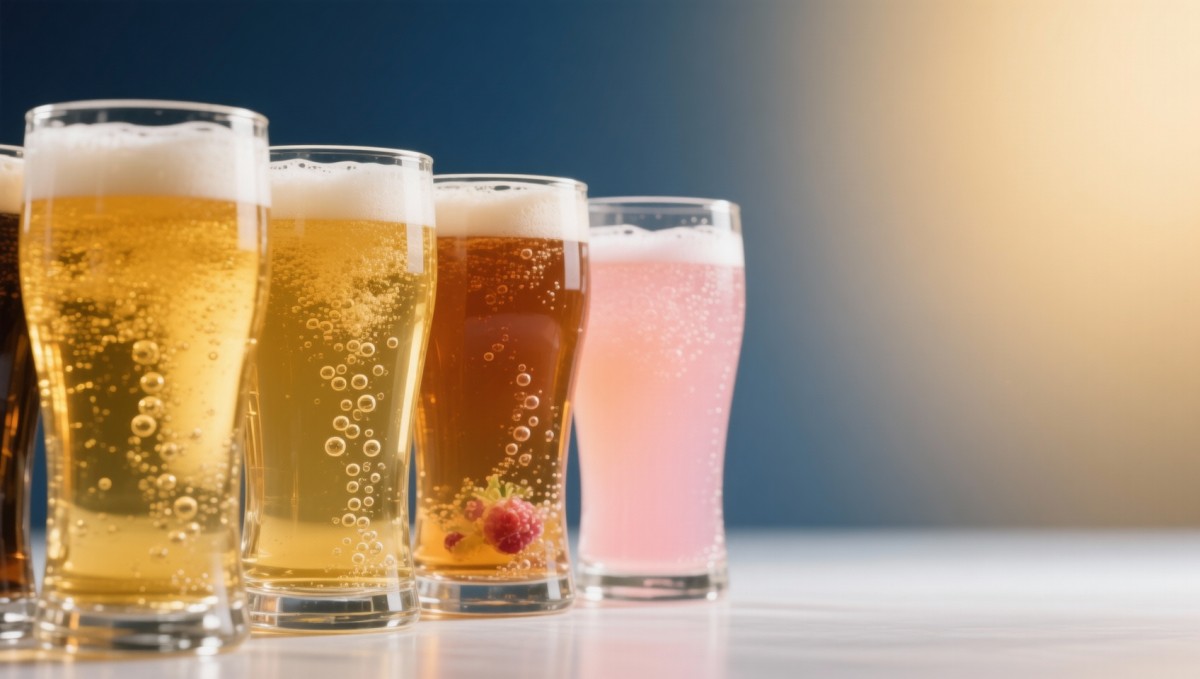
Core Challenges for Small Brands Breaking Through via Contract Manufacturing: Time, Cost, and Differentiation
One characteristic of the craft beer market is the short lifecycle of hit products. From social media buzz to retail distribution, a brand typically has only a few months to respond. Under the traditional model—first finding a beer formulation, then seeking packaging design, and then coordinating factory production scheduling—problems may arise at every stage. Formula development takes a long time, packaging designs that fail to comply with labeling regulations require rework, and factory minimum order quantities can easily reach tens of thousands of cans, making trial-and-error costs too high for small brands. At their core, these issues stem from insufficient supply chain flexibility and professionalism.
In 2025, this contradiction will become even more pronounced. On one hand, consumers’ expectations of beer have shifted from simply “trying something new” to “knowing clearly what they are drinking,” with increased attention to ingredient lists, beer styles, and functional attributes such as zero sugar, zero fat, and the addition of hyaluronic acid or oyster peptides. On the other hand, channel-side purchasing decisions are becoming more cautious. New brands without mature product solutions and compliant packaging will find it difficult to enter procurement lists for chain supermarkets or pubs. Therefore, small brands’ requirements for contract manufacturers have evolved from “being able to produce” to “being able to develop, design, ensure compliance, and support small-batch market testing.”
Beer Development Under the Contract Manufacturing Model: From Standard Formulas to Differentiated Advantages
Many small brands easily fall into a misconception at the start-up stage, believing that they can create a competitive product simply by finding a contract manufacturer and selecting a popular style. In reality, popular categories such as German-style wheat beer and fruit-flavored craft beer already have a large number of homogenized products on the market, making it difficult for consumers to distinguish flavor differences among brands. What truly creates barriers is the uniqueness and consistency of the beer itself.
The R&D capability of Yangchun Beer’s contract manufacturing system lies in its reserve of more than 300 mature specialty beer processes, covering differentiated directions including German-style wheat beer, fruit-flavored craft beer, hyaluronic acid beer, and oyster peptide beer. For small brands, this means they do not need to develop formulations from scratch; instead, they can make adjustments based on existing mature beer bases according to the taste preferences or functional needs of their target customers. For example, channels with a high proportion of female consumers can adjust the sweetness-to-acidity ratio of fruit-flavored craft beer; health-conscious users can choose zero-sugar, zero-fat beer bases or functional solutions with added hyaluronic acid. This “semi-customized” model both shortens the development cycle and ensures that products have sufficiently differentiated selling points.
Two key factors affect the outcome during development. First is the stability testing of beer samples: whether the contract manufacturer can provide samples and allow customers to conduct repeated tastings determines whether the final product meets market expectations. Second is formulation reproducibility: whether the taste and quality of the same beer remain consistent across different production batches directly affects the brand’s reputation. Yangchun Beer’s quality control team and its full SC production, ISO9001, and HACCP qualifications provide a professional foundation in these areas.
Packaging Design and Compliance Review: Often-Overlooked Hidden Barriers
Over the past few years, many small brands have encountered setbacks in packaging. Some products had attractive design drafts but showed severe color deviations after printing; some label information did not comply with food labeling regulations and was required by market regulators to be removed and rectified; some packaging materials were incompatible, resulting in inadequate sealing after filling and issues such as gas leakage and spoilage. These seemingly minor details actually have a direct impact on a brand’s market pace and channel trust.
In 2025, food labeling compliance reviews will only become stricter, especially for functional beers such as hyaluronic acid beer and oyster peptide beer, for which ingredient labeling, efficacy claims, applicable consumer groups, and other aspects are subject to clear requirements. In Yangchun Beer’s contract manufacturing services, “label compliance review” is a standard process. A professional team works directly with customers’ design materials to determine whether information is complete, formats meet standards, and functional claims are substantiated. This upfront review can prevent complaints or penalties caused by labeling issues after product launch and is an effective way for small brands without professional legal teams to reduce risk.
In terms of packaging formats, different specifications such as cans, glass bottles, aluminum bottles, tinplate kegs, and PET kegs are suitable for different sales scenarios. Chain pubs are better suited to tinplate kegs or PET kegs, supermarket channels primarily use cans and glass bottles, while the gift market requires premium packaging such as aluminum bottles. Yangchun Beer’s 16 fully automated intelligent brewing and filling production lines cover these mainstream packaging specifications, enabling small brands to select flexibly according to their target channels without having to find multiple suppliers for different packaging formats.
Minimum Order Quantities and Delivery: Balancing Small-Batch Market Testing and Large-Volume Replenishment
Small brands typically face considerable financial pressure in their early stages. If a contract manufacturer’s minimum order quantity is too high, inventory risks can directly strain cash flow. Market trends indicate that in 2025, more beverage brands will adopt a “small batches, multiple orders” purchasing strategy—using a limited quantity of products to test market response first, then placing additional orders after sales performance is confirmed. Yangchun Beer supports flexible small-batch customization starting from one keg. For newly established brands or chain pubs, this threshold means that product validation can be completed at the lowest possible cost. At the same time, its multi-regional production layout in Shandong, Qinghai, and Hainan enables fast local fulfillment, shortens logistics lead times, and reduces inventory backlogs.
When a product proves successful in the market and requires large-volume replenishment, production capacity at the scale of tens of thousands of tons can ensure timely order delivery. This model of “flexible launch for small orders and stable delivery for large orders” allows small brands to adjust procurement volumes according to market rhythms rather than being constrained by minimum order quantities.
Channel Adaptation and Operational Support: Extending from Production to Sales
Contract manufacturing is not simply about producing products and delivering them to customers. The channels products enter, how they are priced, and how marketing materials are developed likewise determine whether a brand can survive. Many small brands realize only after receiving their products that they lack channel operation experience: they do not know how to introduce product selling points to end customers, do not understand display standards across different channels, and may not even know how to create appealing product promotional images.
The channel operation support provided as part of Yangchun Beer’s contract manufacturing services addresses precisely these downstream issues. From refining product selling points and designing promotional materials to providing channel connection recommendations, this support can help small brands shorten the time from “receiving goods” to “selling goods.” For chain pubs or corporate gift buyers, the contract manufacturer can also directly provide customized packaging solutions and beer recommendations, reducing communication costs.
2025 Trend Assessment: Key Actions for Seizing Market Windows
Segmentation in the craft beer market will continue. The opportunity for small brands does not lie in competing with major breweries on scale, but in securing positions in niche segments. Several directions are worth watching in 2025. First, functional beers incorporating ingredients such as hyaluronic acid and oyster peptides cater to young consumers’ demand for “drinking for health.” Second, zero-sugar, zero-fat products are gaining a broader audience for low-calorie beer amid the sugar-control trend. Third, regionally distinctive flavors and beer innovations using local ingredients can readily generate word-of-mouth in specific markets.
What these directions have in common is the need for professional support from contract manufacturers in beer development, compliance review, and packaging design, rather than mere production capacity. When selecting a contract manufacturing partner, small brands should focus on the manufacturer’s R&D reserves, compliance capabilities, and flexibility, rather than looking only at price. Yangchun Beer’s 39 years of experience in the craft beer industry and more than 300 mature beer processes provide practical support for this collaboration model.
Market windows will not wait, but small brands can find their own place in niche segments through sound contract manufacturing strategies, lower trial-and-error costs, and faster market response. With the right direction and a supply chain that keeps pace, 2025 presents an opportunity to break through amid market reshuffling.