

When dissolved oxygen is high after filling at a beer plant, do not simply increase the carbon dioxide dosage or adjust filling pressure. First confirm that the measurement is reliable, then compare oxygen levels at the brite beer tank outlet, filler inlet, and finished product after sealing to determine where the increase begins. Otherwise, adjusting the filler may mask oxygen pickup in the transfer line or errors in sampling.
Another key point is to distinguish dissolved oxygen in the beer from total package oxygen. A low dissolved oxygen reading after sealing does not mean the oxygen load in the package is low; oxygen remaining in the headspace will gradually enter the beer. Troubleshooting must record the sampling time, package condition, and measurement method. Do not compare isolated readings alone.
First rule out falsely high readings caused by sampling and measurement
Low-oxygen beer is highly sensitive to the sampling process. Open sampling, leaking hose connections, or residual air in the sampling valve can all cause readings to exceed the true value. If online readings are normal but manual samples are high, check the sampling chain first rather than immediately changing production parameters.
- Use a closed sampling device suitable for pressurized beer. Thoroughly flush the valve body, lines, and measurement chamber in accordance with the measurement procedure to prevent residual air.
- Keep pressure and flow stable during measurement to avoid significant gas breakout. Check whether bubbles are affecting sensor contact and reading stability.
- Check calibration, zero point, and sensor condition as required by the instrument. Confirm that temperature compensation is functioning correctly, and use consistent units. Micrograms per liter and milligrams per liter differ by a factor of 1,000.
- Measure finished product using a suitable method, such as piercing. Standardize the interval from sealing to measurement, sample temperature, and agitation conditions. Do not directly compare results obtained using different methods.
Determine whether levels exceed limits using the internal control requirements applicable to the plant’s specific beer, packaging, and measurement method. Dissolved oxygen readings taken at different times should not be interpreted simply as having “improved on their own after standing”: oxygen may enter the headspace, redistribute, or already have reacted through oxidation.
Use sampling at different stages to locate where oxygen enters
Under relatively stable operating conditions, sample from the brite beer tank outlet, filler inlet, and finished product after sealing from the same batch. Account for the time required for beer to travel through the lines so that the samples correspond as closely as possible to the same portion of beer. Record beer temperature, tank pressure, line speed, downtime, and filling valve number.
If oxygen is already high at the brite beer tank outlet, investigate upstream processes such as beer transfer, filtration, blending, deaerated water, and tank purging. If the outlet reading is normal but oxygen rises at the filler inlet, focus on the transfer lines and buffer tank. If the inlet reading is normal but the finished product is high, focus on container purging, filling, and sealing. If the system has a filling bowl, also check its liquid level, headspace purging, and pressure stability.
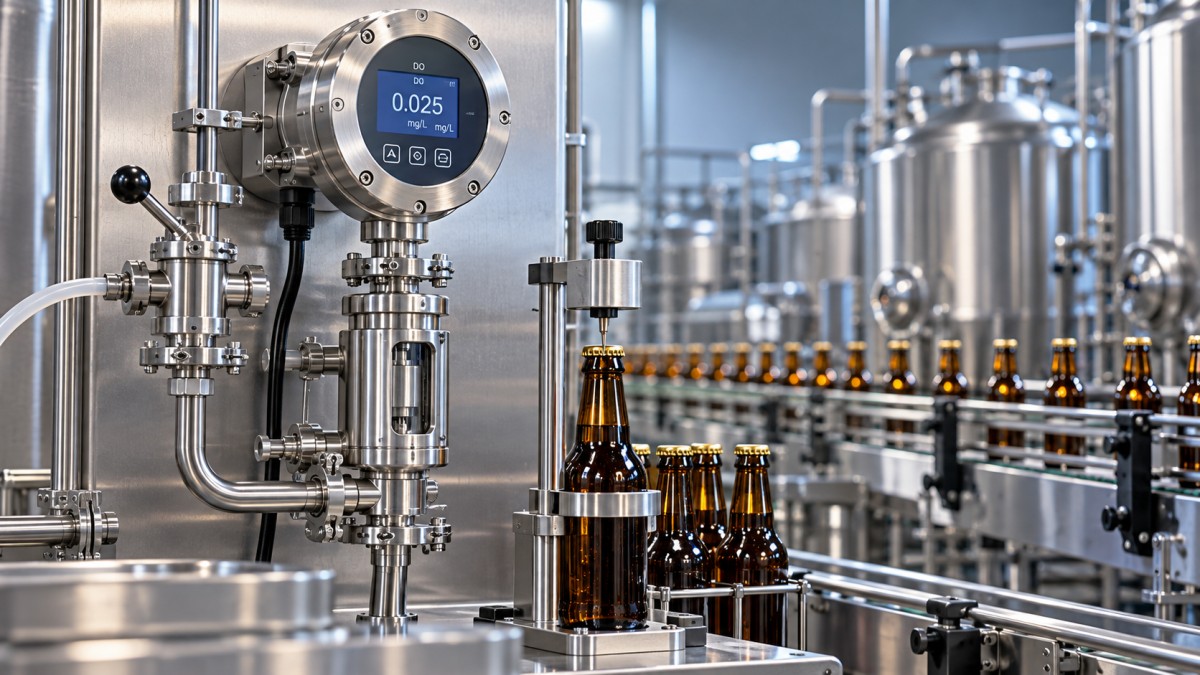
Do not locate the source based on a single sample. Consistently high readings across consecutive samples and periodic high readings in a small number of samples point to different causes: the former calls for closer inspection of shared gas supplies and process conditions, while the latter calls for tracing by filling valve, capping head, or seaming head.
Focus on residual air and localized air ingress in the transfer section
After startup, a tank changeover, or the end of cleaning, insufficient purging of the lines can allow residual air to enter the filler with the beer. Check branches, filter housings, valve assemblies, and high points for pockets where air can collect. Do not assume that the entire route has been purged just because beer is flowing from the main line outlet.
During transfer, check the pump inlet feed, mechanical seals, valve stem seals, hose connections, and gaskets. Even when the system is generally under positive pressure, localized low pressure at the pump inlet or transient pressure fluctuations can cause air ingress. The absence of outward beer leakage does not rule out air entering the system.
If oxygen levels rise as the liquid level falls, pump speed changes, or a tank changeover takes place, check whether there is insufficient feed, an intake vortex, or air entrainment during switching. If water, liquid additives, or other ingredients are added, also verify their oxygen levels and whether the addition lines have been purged.
Do not focus only on carbon dioxide pressure in the filling section
Normal gas supply pressure does not mean that all air has been removed from the container. Check oxygen impurity control in the gas supply, supply stability at the point of use, and whether purge nozzles are blocked or misaligned. Check vacuum and gas purging for glass bottles, and gas purging for cans, against the respective equipment processes.
Purging effectiveness depends on gas flow path, exposure time, and container condition; using more gas is not necessarily better. If line speed increases and purging time is reduced, or if nozzle positions and programs are not adjusted after a container size change, residual air may increase.
Also check filling valve seals, the counter-pressure process, the gas return path, and fill-level control. Match abnormal samples to valve numbers and compare whether they are concentrated at particular valve positions. Beer warming and pressure fluctuations can cause vigorous gas breakout and unstable foam, interfering with fill-level control and air removal before sealing. These issues should not all be attributed to an inadequate gas supply.
Investigate air before sealing separately from leakage after sealing
Exposure time between filling and sealing, transfer stability, and the effectiveness of foam in displacing headspace air all affect package oxygen load. If foam injection is used, check its position, intensity, and consistency: insufficient foam can leave air behind, while excessive foam injection can cause product loss and fill-level fluctuations.
Assess headspace volume together with residual oxygen. Even if the oxygen proportion in the headspace gas is the same, a larger headspace contains more oxygen. Where possible, measure total package oxygen—the sum of dissolved oxygen in the beer and oxygen in the headspace—and evaluate it using a consistent basis to avoid overlooking headspace oxygen.
If an abnormality is detected immediately after sealing, first investigate air removal before sealing. If readings change during storage, further assessment should take package integrity into account. For glass bottles, check the fit between the bottle finish and crown cap; for cans, check seam dimensions and seal integrity. A normal appearance or the absence of beer leakage at the time of inspection does not prove that the package is airtight.
Verify the diagnosis based on when the abnormality occurs
If readings are high in the first product after startup, focus on purging and startup release procedures. If they are high after a stop and restart, check for air ingress during the stoppage and for purging during restart. If they rise after increasing line speed, compare purging time, gas supply capacity, and filling stability. Repeated abnormalities at a fixed valve position call for targeted maintenance.
Change only one major variable at a time, keep the sampling method consistent, and repeat measurements over time. Before servicing valve assemblies, gas lines, or sealing equipment, stop and isolate the equipment and release pressure. Ensure ventilation in areas where carbon dioxide is discharged. Isolate and assess product from the affected period in accordance with quality procedures; do not use compliant samples taken after conditions have stabilized to replace the assessment of earlier batches. The cause can be considered eliminated only when the oxygen increase at the abnormal stage has fallen and the result is consistently reproducible during startup, restart, and normal line-speed operation.